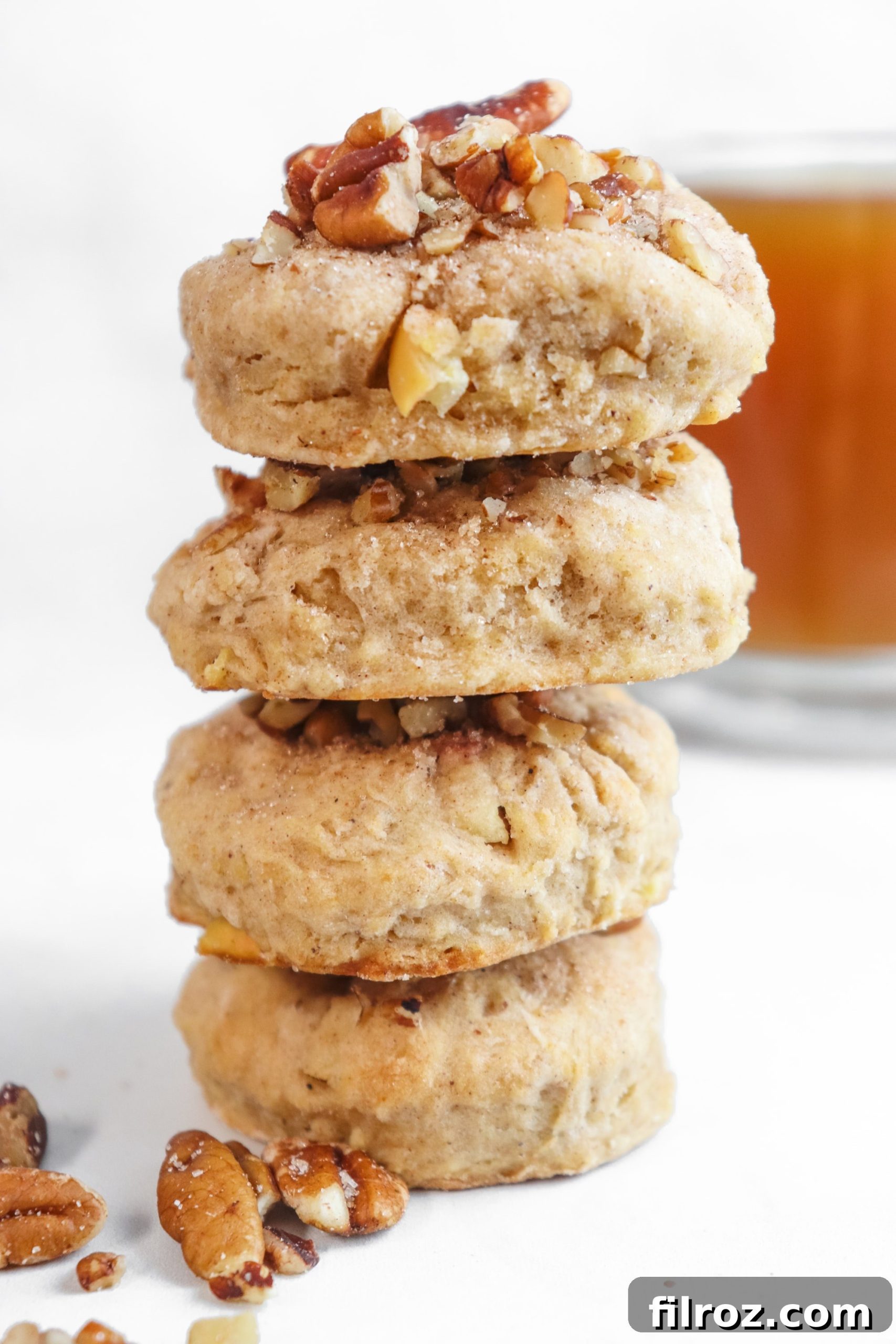
As autumn leaves begin to paint the landscape with hues of gold and crimson, there’s an irresistible call for cozy comforts and warming flavors. Among these cherished seasonal delights, our homemade Apple Cider Scones stand out as an absolute favorite. Imagine biting into a scone that is wonderfully soft, yet delightfully flaky, studded with tender pieces of real chopped apple, and crowned with a fragrant sprinkle of cinnamon-nutmeg sugar and crunchy pecans. This isn’t just a treat; it’s an experience. Perfectly paired with a steaming mug of hot coffee or a comforting cup of tea, these scones promise to transform any cool morning into a moment of pure bliss. Their robust apple cider flavor captures the very essence of fall, making them an ideal addition to your breakfast table, a delightful accompaniment to brunch, or simply a sweet escape enjoyed throughout your day.
These Apple Cider Scones are versatile marvels. Serve them warm straight from the oven, allowing their comforting aroma to fill your home. For an added touch of indulgence, consider serving them with a side of softened butter, rich apple butter, your favorite fruit jam, or a dollop of freshly whipped cream. They’re simple enough for a casual weekday breakfast but elegant enough to impress guests at a weekend brunch. Once you taste these tender, flavorful scones, you’ll understand why they’ve become a staple in our fall baking repertoire.
Understanding the Scone: A Culinary Journey
When you hear the word “scone,” your mind might immediately conjure images of a fluffy, biscuit-like pastry, especially if you’re accustomed to American baking traditions. Indeed, in many ways, scones and American biscuits share a common lineage and similar preparation methods. However, the scone boasts a rich history that stretches back to its origins in Scotland. From there, it journeyed across the British Isles, becoming an iconic and indispensable part of the traditional British high tea. In its classic British form, a scone is typically round, served plain, and enjoyed with clotted cream, strawberry jam, and sometimes even grated cheddar cheese – a combination that might surprise an American palate!
The culinary journey of the scone didn’t stop in Britain. Countries that were once part of the British Empire, such as South Africa and Australia, adopted these beloved baked treats, holding them with a sense of national pride and continuing to serve them as cherished staples. It’s fascinating how terminology can differ across cultures; what the British refer to as a “biscuit” is actually closer to what Americans would call a cookie. This linguistic distinction highlights the unique identity of the scone and its significant place in global baking. Our Apple Cider Scones, while inspired by American fall flavors, carry the spirit of this storied pastry, offering a delightful fusion of tradition and contemporary taste.
Why You’ll Fall in Love with These Apple Cider Scones
Beyond their delightful taste and texture, there are countless reasons why these Apple Cider Scones deserve a prime spot in your autumn baking rotation. They strike the perfect balance between sweet and savory, offering a satisfying treat without being overly rich or heavy. The real star of the show is the authentic apple cider, which infuses every bite with a nuanced, tangy-sweet apple flavor that is distinct from mere apple juice. Combined with warm spices like cinnamon and nutmeg, these scones truly encapsulate the essence of fall.
Moreover, this recipe is designed for accessibility. Even if you’re a novice baker, you’ll find the steps straightforward and easy to follow, leading to consistently impressive results. The flaky texture, achieved by using cold butter and a gentle touch, is a testament to classic scone-making techniques, ensuring a melt-in-your-mouth experience. Whether you’re seeking a comforting breakfast, a lovely afternoon snack, or a unique dessert for a fall gathering, these Apple Cider Scones offer a versatile and universally loved option. They’re a fantastic way to utilize fresh fall apples and bring the comforting scents of the season into your kitchen. Prepare to be enchanted by their charm and flavor!
Essential Ingredients for Apple Cider Scones
Crafting a perfect batch of these fall-inspired Apple Cider Scones begins with selecting the right ingredients. Each component plays a vital role in achieving that sought-after flaky texture and rich, comforting flavor profile. Here’s a breakdown of what you’ll need, along with some helpful tips for making the best choices:
- All-Purpose Flour: The foundation of our scones, providing structure.
- Granulated Sugar: Adds a touch of sweetness to balance the tartness of the apple cider.
- Cold Butter: Crucial for flakiness. The colder, the better!
- Fresh Chopped Apple: Adds bursts of tender, fruity flavor and moisture.
- Egg: Acts as a binder and contributes to the scone’s tender crumb.
- Real Apple Cider: The star ingredient, infusing deep apple flavor.
- Chopped Pecans: For a delightful crunch and nutty undertone.
- Baking Powder: The primary leavening agent, ensuring a good rise and airy texture.
- Ground Cinnamon: A quintessential fall spice that pairs beautifully with apples.
- Ground Nutmeg: Adds a warm, aromatic depth that complements the cinnamon.
Ingredient Spotlights & Tips:
- Apple Cider vs. Apple Juice: This is a critical distinction! Always opt for apple cider, not apple juice. Apple cider is less filtered, has a slightly thicker consistency, and boasts a more robust, complex apple flavor that is essential for these scones. You can usually find it in the refrigerated produce section or sometimes alongside other juices. Its cloudy appearance and richer taste are what give these scones their authentic character.
- The Power of Cold Butter: For truly flaky scones, cold butter is non-negotiable. When cold butter is cut into the flour mixture, it creates small pockets of fat. As the scones bake, these pockets release steam, creating distinct layers and that signature flaky texture we all adore. Avoid using softened or melted butter for the dough, as it will result in a more cake-like consistency rather than flaky.
- Choosing Your Apples: While you can use any apple variety you prefer, some hold up better to baking than others. I’ve found that a Red Delicious apple retains its shape and offers a pleasant sweetness when baked into the scones. Other excellent choices include Honeycrisp, Fuji, Gala, or Braeburn. Feel free to experiment with your favorite firm, sweet-tart apple to find your perfect scone experience.
- Spice Quality: Freshly ground cinnamon and nutmeg will make a noticeable difference in the aromatic profile of your scones. Check the dates on your spice jars; older spices lose their potency.
Crafting Your Apple Cider Scones: A Step-by-Step Guide
Creating these delectable Apple Cider Scones is a wonderfully rewarding baking project that’s surprisingly simple, even for beginners. Follow these clear steps to achieve perfectly flaky and flavorful results:
Step 1: Preheat Your Oven and Prepare Your Baking Surface
Begin by preheating your oven to a precise 400°F (200°C). This ensures that your oven is at the correct temperature when the scones are ready to bake, which is crucial for their rise and texture. Next, prepare a baking sheet by lightly spraying it with cooking oil or lining it with parchment paper. Alternatively, for a non-stick and reusable option, you are welcome to use a silicone baking mat, which ensures even baking and easy release.
Step 2: Combine Dry Ingredients and Cut in Cold Butter
In a spacious mixing bowl, thoroughly whisk together the all-purpose flour, granulated sugar, baking powder, ground cinnamon, and ground nutmeg. Ensuring these dry ingredients are well combined creates an even distribution of flavor and leavening. Next, take your very cold butter, cut into small cubes, and add it to the flour mixture. Using a pastry blender, two knives, or even your fingertips, work the butter into the flour until the mixture resembles coarse crumbs. Some pea-sized pieces of butter should still be visible; these are key to developing those desirable flaky layers in your scones. Be mindful not to overwork the butter or allow it to melt from the warmth of your hands.
Step 3: Incorporate Wet Ingredients and Fresh Apple
Once your dry mixture with the cut-in butter is ready, create a well in the center. Gently add the beaten egg and the apple cider. Using a spatula or your hands, carefully mix these wet ingredients into the dry mixture until a shaggy, cohesive dough begins to form. At this point, gently fold in the finely chopped fresh apple. Continue to mix just until everything is combined, taking care not to overmix. Overmixing can lead to tough scones, as it develops the gluten in the flour too much. The goal is a dough that just barely comes together, still looking a little crumbly in places.
Step 4: Shape and Cut the Scone Dough
Lightly flour a clean work surface or a large cutting board. Turn the scone dough out onto this prepared surface. Gently pat the dough into a circular shape, aiming for a thickness of approximately 1/2 inch. Resist the urge to knead vigorously; a light touch is best here. Using a 2-inch biscuit cutter (or a sharp knife for triangular shapes), cut out your scones. For optimal rise and tenderness, press straight down with the cutter without twisting. Gather any remaining dough scraps, gently re-form them into a disk, and cut out additional scones until all the dough is used. Arrange your freshly cut scones on the prepared baking sheet, ensuring there’s enough space between each scone for even baking and proper airflow. Typically, about 1 inch of space is sufficient.
Step 5: Apply Topping and Bake to Golden Perfection
Before baking, prepare the aromatic topping. In a small dish, melt the butter. In a separate small bowl, combine the sugar, cinnamon, and nutmeg for your spice blend. With a pastry brush, lightly brush the tops of each scone with the melted butter. This not only adds richness but also helps the sugar mixture adhere. Generously sprinkle the cinnamon-nutmeg sugar mixture over the buttered tops, ensuring a lovely coating. Finally, scatter the chopped pecans over each scone for an extra layer of texture and nutty flavor. Carefully transfer the baking sheet with the assembled scones to your preheated oven. Bake for approximately 12 minutes, or until the scones are beautifully golden brown on top and a toothpick inserted into the center comes out clean. Keep an eye on them, as oven temperatures can vary.
Step 6: Cool Slightly and Serve Warm
Once baked to perfection, carefully remove the scones from the oven. For best results, transfer them from the hot baking sheet to a wire rack to cool for a few minutes. This prevents the bottoms from becoming soggy and allows them to firm up slightly. While still warm, these Apple Cider Scones are at their absolute best. Serve them as is, or with your favorite accompaniments: a smear of warm butter, a dollop of apple butter, a spoonful of berry jam, or a cloud of whipped cream. Pair them with a robust cup of coffee, a soothing herbal tea, or even a glass of chilled apple cider for the ultimate autumnal treat!
The Perfect Topping: Cinnamon Nutmeg Sugar and Pecans
The crowning glory of these Apple Cider Scones is their simple yet incredibly effective topping. We use a fragrant blend of cinnamon and nutmeg mixed with granulated sugar, which caramelizes slightly as the scones bake, creating a delightful, subtly spiced crust. To add an additional layer of texture and nutty depth, a sprinkling of chopped pecans is added. The pecans toast lightly in the oven, enhancing their flavor and providing a wonderful contrasting crunch to the soft scone interior.
Topping Variations:
- Nut-Free Option: If you have nut allergies or simply prefer without, feel free to omit the pecans entirely. The cinnamon-nutmeg sugar topping alone is delicious.
- Different Nuts: Almonds, walnuts, or even a mix of several nuts would also be fantastic. Toast them lightly before chopping for an intensified flavor.
- Simple Glaze: For an extra touch of sweetness, after the scones have cooled slightly, you could drizzle them with a simple glaze made from powdered sugar, a touch of milk or apple cider, and a drop of vanilla extract.
- Sparkling Sugar: For a beautiful visual and an extra crunch, use coarse sparkling sugar instead of regular granulated sugar in your topping mix.
Achieving Scone Perfection: Baking Time and Doneness
One of the most common questions in scone baking is about the optimal baking time. These Apple Cider Scones are designed to bake quickly, requiring only about 12 minutes at 400°F (200°C). However, it’s crucial to remember that all ovens can vary significantly in their heating and temperature accuracy. A few minutes too long, and your scones might become dry; too short, and they could be doughy in the middle.
To ensure your scones are perfectly baked, keep an eye on them towards the end of the baking time. Look for a beautiful golden-brown color on the tops and edges. For a more precise test, insert a clean toothpick or a thin skewer into the center of one of the larger scones. If it comes out clean, with no wet batter clinging to it, your scones are ready. If there’s still some wetness, return them to the oven for an additional 2-3 minutes, checking frequently to prevent over-browning or burning. The goal is a light, tender interior that is fully cooked through. Don’t be afraid to trust your senses – the aroma of freshly baked scones will also be a strong indicator of their readiness!
Storage and Freezing Guidelines for Scones
While these Apple Cider Scones are undeniably best enjoyed fresh from the oven, you can certainly store leftovers or even prepare them ahead of time for future enjoyment. Proper storage ensures they retain their flavor and texture for as long as possible.
Storing Leftover Baked Scones:
Once completely cooled, leftover scones should be stored in an airtight container. They will remain fresh and delicious for 2-3 days at room temperature. If your kitchen tends to be warm or humid, or if you want to extend their freshness slightly, you can also store them in the refrigerator, where they’ll last for up to 4 days. Before serving refrigerated scones, a quick warm-up in the microwave (10-15 seconds) or a toaster oven will revive their tender texture and fragrant aroma.
Can I Freeze Apple Cider Scones? Absolutely!
Freezing scones is an excellent way to prepare them in advance or save extra batches. These scones freeze beautifully and can be stored in the freezer for up to 1 month, without significant loss of quality. Here’s the recommended method for freezing:
- Flash Freeze: Arrange the fully baked and cooled scones on a baking sheet, ensuring they are not touching. Place the baking sheet in the freezer for about 1-2 hours, or until the scones are completely solid. This step prevents them from sticking together.
- Individual Wrapping: Once flash-frozen, wrap each scone individually in plastic wrap. This extra layer of protection helps prevent freezer burn and keeps their topping intact.
- Airtight Container/Bag: Transfer the individually wrapped scones into a large freezer-safe airtight container or a heavy-duty freezer bag. Squeeze out as much air as possible from the bag before sealing.
Thawing and Reheating Frozen Scones:
When you’re ready to enjoy a frozen scone, you have a couple of options:
- Overnight Thawing: Transfer the wrapped scone(s) to the refrigerator and let them thaw overnight.
- Room Temperature Thawing: For a quicker thaw, unwrap the scone and let it sit at room temperature for 1-2 hours.
Once thawed, you can warm them up in the microwave for about 10-15 seconds until heated through, or for a crispier exterior, heat them in a toaster oven or conventional oven at 300°F (150°C) for 5-7 minutes. Enjoy them just as you would freshly baked scones!

Apple Cider Scones
15 scones
15 minutes
12 minutes
27 minutes
Delight in the quintessential taste of autumn with these irresistibly flaky Apple Cider Scones. Infused with real apple cider and warm spices, and crowned with a cinnamon-pecan topping, they are the perfect fall treat for breakfast, brunch, or an afternoon pick-me-up. Simple to make, incredibly delicious, and sure to become a seasonal favorite!
Ingredients
- 2 cups all-purpose flour
- 1⁄4 cup granulated sugar
- 1⁄4 cup firm, cold butter, cubed
- 1/3 cup chopped apple (e.g., Red Delicious, Honeycrisp)
- 1 large egg
- 1/3 cup apple cider (not juice)
- 1⁄2 cup chopped pecans
- 1 1⁄2 tsp baking powder
- 1 tsp ground cinnamon
- 1⁄2 tsp ground nutmeg
- For the Topping:
- 2 tbsp granulated sugar
- 2 tbsp unsalted butter, melted
- 1 tsp ground cinnamon
- 1/4 cup chopped pecans (optional, for extra crunch)
Instructions
1. Preheat oven to 400°F (200°C). Lightly spray a baking sheet with oil or line with parchment paper/silicone mat.
2. In a large bowl, whisk together flour, sugar, baking powder, cinnamon, and nutmeg.
3. Cut the cold, cubed butter into the flour mixture using a pastry blender or your fingertips until it resembles coarse crumbs with some pea-sized pieces of butter remaining.
4. In a separate small bowl, whisk the egg and apple cider together. Add this wet mixture to the dry ingredients, along with the chopped apple. Mix gently with a spatula or your hands until a shaggy dough forms. Do not overmix.
5. Turn the dough onto a lightly floured surface. Gently pat the dough into a 1/2-inch thick circle. Using a 2-inch biscuit cutter, cut out scones. Gather and re-roll scraps once to cut more scones.
6. Arrange the scones on the prepared baking sheet, leaving about 1 inch of space between them.
7. Prepare the topping: In a small dish, melt 2 tablespoons of butter. In another small dish, combine 2 tablespoons of sugar and 1 teaspoon of cinnamon.
8. Brush the tops of the scones with the melted butter, then sprinkle generously with the cinnamon-sugar mixture. If using, sprinkle additional chopped pecans over the top of each scone.
9. Bake for 12-15 minutes, or until the tops are golden brown and a toothpick inserted into the center comes out clean.
10. Transfer scones to a wire rack to cool slightly. Serve warm with butter, jam, apple butter, or whipped cream. Enjoy with your favorite hot beverage!
Notes
• Store leftover scones in an airtight container at room temperature for 2-3 days, or in the refrigerator for up to 4 days.
• To freeze, flash freeze baked and cooled scones on a baking sheet, then wrap individually in plastic wrap and store in a freezer-safe bag for up to 1 month. Thaw at room temperature or overnight in the fridge, then reheat briefly in the microwave or oven.
• Enjoy these delightful scones with your morning coffee, afternoon tea, or as a special treat with apple cider!
Did you make this recipe?
If you loved this recipe, we would love for you to leave a review to help others!
Other Scone Recipes to Explore
If you’ve enjoyed the comforting flavors of these Apple Cider Scones and are looking to broaden your scone-making horizons, you’re in luck! The world of scones is incredibly diverse, offering a range of sweet and savory options to suit any palate and occasion. Whether you’re craving something indulgent, a healthier alternative, or a unique flavor combination, there’s a scone recipe waiting for you to discover. Here are some of our other favorite scone recipes that we highly recommend you try:
- Starbucks Pumpkin Scones: Recreate the beloved coffee shop classic with a homemade touch, bursting with fall pumpkin spice.
- Bacon Avocado Scones: A delightful savory option perfect for brunch or a unique side dish, combining crispy bacon with creamy avocado.
- Maple Oatmeal Scones: Wholesome and hearty, these scones offer a comforting blend of maple and oats, ideal for a cozy morning.
- Healthy Chocolate Scones: Indulge your sweet tooth guilt-free with these chocolatey scones that don’t compromise on flavor or texture.
- Cranberry Orange Scones: A vibrant and zesty combination of tart cranberries and bright orange, perfect for any time of year.