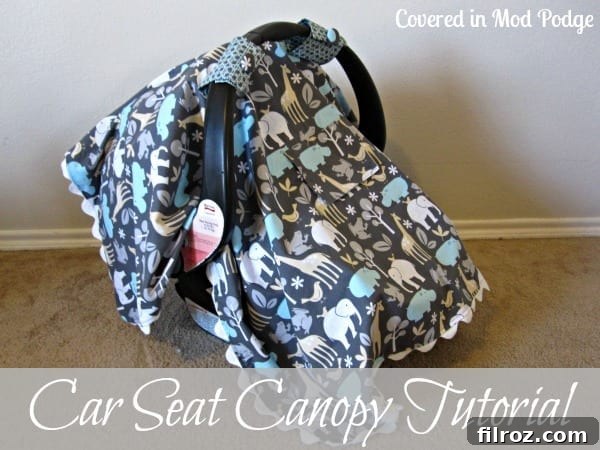
Craft Your Own: The Ultimate Easy Car Seat Canopy Tutorial
Welcome, fellow creators and new parents! Michaela from Covered in Mod Podge is here again, excited to guide you through an incredibly rewarding and surprisingly simple sewing project: creating your very own car seat canopy. This isn’t just a practical accessory; it’s a statement of love, a shield of comfort, and a stylish addition to your baby’s gear. Whether you’re a seasoned sewist or a complete beginner, this tutorial is designed to make the process enjoyable and the outcome beautiful.
The journey into parenthood is often filled with wonderful new experiences, but it can also present unique challenges, especially when navigating it in a new environment. I remember vividly moving from California to Texas five months into my pregnancy. Being in a new city, away from my usual support system of family and friends, was a significant transition. I was incredibly fortunate to have a few kind women step in, bringing me meals, encouraging me to get out, and offering companionship during those precious, yet sometimes overwhelming, early days of motherhood. Their kindness made an immense difference.
One of these wonderful friends recently welcomed her second child, a sweet baby boy. She reached out, asking if I could craft a car seat canopy for her little one, something to offer warmth and protection during the colder winter months. It was an honor to oblige, and it rekindled my passion for creating handmade essentials that offer comfort and style. This project is a testament to the power of thoughtful gifts and the joy of making something truly special for the new additions in our lives.
A car seat canopy serves many purposes beyond just keeping baby warm. It acts as a protective shield against various elements: from brisk winds and unexpected drizzles to harsh sunlight and overwhelming stimulation. More importantly, it provides a crucial barrier against germs, offering a peaceful, private space for your newborn to rest or feed while out and about. It’s an indispensable item for any new parent, making outings a little less stressful and a lot more comfortable for your little one.
Gather Your Essentials: Materials and Tools
Before diving into the creative process, gathering all your materials and tools ensures a smooth and enjoyable crafting experience. For this project, we’ll focus on both the fabric and the essential notions to bring your vision to life. The beauty of a DIY project like this is the ability to customize every element, from the fabric pattern to the choice of trim, making it truly unique.
Required Materials:
- 1 1/4 yards of Outside Fabric: This will be the visible exterior of your canopy. Consider durable, breathable fabrics like quilting cotton, flannel for warmth, or even a soft linen blend. Think about patterns and colors that reflect your style or the baby’s nursery theme.
- 1 1/4 yards of Inside Fabric: This forms the interior lining, often a softer fabric to be gentle against baby’s skin. Flannel, minky, or a soft cotton are excellent choices for comfort. Ensure it complements your outside fabric.
- 4 1/2 yards of Jumbo Ric Rac: This decorative trim adds a charming finish to the edge of your canopy. Feel free to experiment with different widths or substitute with piping, ribbon, or even a contrasting fabric bias binding for a different look.
- 1-inch Covered Button Kit: These kits allow you to create custom buttons that perfectly match your fabric, adding a professional and coordinated touch. Alternatively, you could use snaps or pre-made buttons that complement your design.
- 6 inches of Velcro: Essential for securing the straps. Opt for a sew-in variety that can withstand repeated washing.
Essential Tools:
- Sewing Machine: A basic machine with a straight stitch function is all you need.
- Fabric Scissors or Rotary Cutter and Mat: For precise and clean cuts.
- Iron and Ironing Board: Crucial for pressing seams and achieving crisp finishes.
- Pins or Fabric Clips: To hold fabric layers in place during sewing.
- Measuring Tape or Ruler: For accurate measurements.
- Fabric Marking Pen or Chalk: For drawing cutting lines and window outlines. Disappearing ink pens are highly recommended for temporary marks.
- Thread: All-purpose polyester thread that matches your fabric colors.
- Seam Ripper: Every sewist’s best friend for correcting mistakes!
- Turning Tool (optional): A chopstick or point turner can be helpful for turning straps right side out.
- A Bowl (for rounding corners): A dinner plate or any round object can serve as a template.
Step-by-Step Guide: Crafting Your Car Seat Canopy
Now that you have all your supplies, let’s embark on the journey of creating this beautiful and functional car seat canopy. Follow these detailed steps for a flawless finish.
Step 1: Fabric Preparation and Cutting
The foundation of any successful sewing project begins with proper fabric preparation. Since this canopy will likely become good friends with your washing machine, pre-washing and ironing your fabric is non-negotiable. Pre-washing prevents future shrinkage and bleeding of colors, ensuring your finished canopy maintains its shape and vibrancy. Ironing removes wrinkles, allowing for more accurate cutting and sewing.
Once prepped, it’s time for precise cutting. Take your time with this step, as accurate cuts lead to a professional-looking final product. I prefer to lay out and cut all pieces at once to streamline the process:
- Main Canopy Pieces: Cut both your outside and inside fabrics to 36 x 41 inches. These dimensions are ideal for a standard car seat, offering ample coverage.
- Strap Pieces: From your inside fabric, cut two pieces measuring 8.5 x 10 inches. These will form the sturdy straps that attach the canopy to the car seat handle.
- Covered Buttons: Using your main fabric, cut two circles according to the instructions provided with your 1-inch covered button kit. Follow the kit’s directions to assemble your fabric-covered buttons.
- Flap Pieces: Cut one 6 x 8 inch rectangle from both your main fabric and your inside fabric. This will create the peek-a-boo window flap.
- Velcro: Cut your 6 inches of Velcro into two equal 3-inch strips.
Step 2: Constructing the Main Canopy Body
This is where your canopy truly begins to take shape. The key to a neat finish lies in careful alignment and precise pinning, especially when incorporating the ric rac trim.
- Align Fabrics: Place your main (outside) fabric and your inside (lining) fabric right sides together. This means the printed or “pretty” sides of both fabrics are facing each other. Ensure all edges are perfectly aligned.
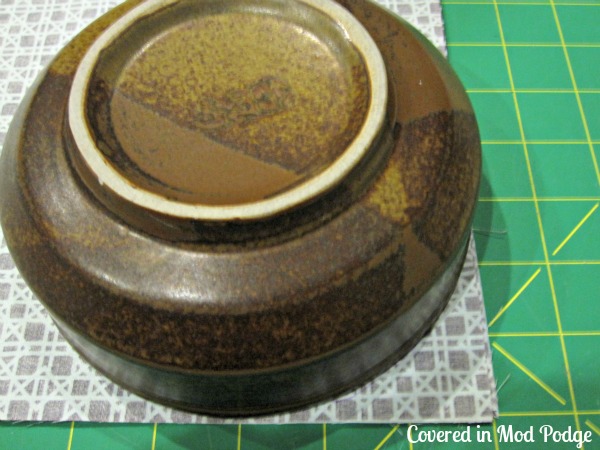
- Round the Corners: To give your canopy a softer, more finished look, use a round object, like a dinner plate or a large bowl, as a template. Place it at each corner and trace the curve with your fabric marking tool. Then, carefully cut along these lines to round all four corners.
- Insert Ric Rac: Now, for the fun part! Take your jumbo ric rac and sandwich it between your two fabric layers. The edge of the ric rac should align with the raw edge of your fabric, with the decorative “zig-zag” part facing inwards. Pin the ric rac securely all around the curved edges, making sure to keep it flush with the fabric edges. For the straight edges, maintain a consistent distance from the edge. Pay extra attention to pinning the curves well to prevent shifting.
- Create Turning Gap: As you pin, remember to mark a four-inch gap along one of the straighter edges. This opening is crucial for turning your canopy right side out later. Do not sew this section.
- Sewing the Edges: Using a 1/4 inch seam allowance, carefully sew all around the edges of your canopy, securing the fabrics and the ric rac. Start and end with a backstitch for added security. Remember to leave your marked four-inch turning gap unsewn.
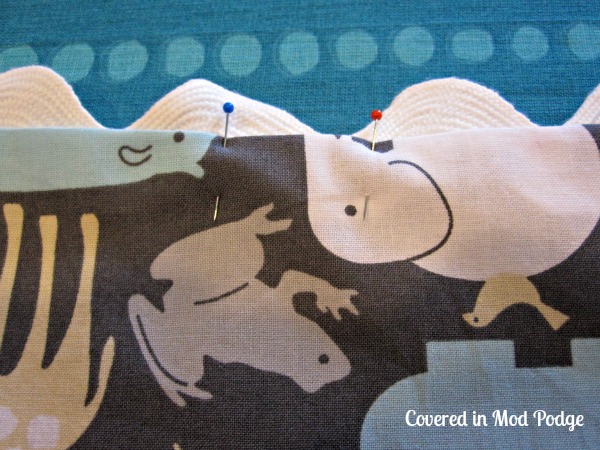
- Turn and Press: Once sewn, carefully clip the curves to reduce bulk, being careful not to cut through your stitches. Then, reach into the turning gap and gently pull the entire canopy right side out. Use a point turner or a dull pencil to push out the curves for a smooth finish. Press the entire canopy thoroughly with your iron, paying special attention to flattening the edges and ensuring the ric rac is neatly exposed.
- Close the Gap and Topstitch: Fold the raw edges of your turning gap inwards, aligning them with the sewn seam. Press them flat. Now, topstitch all around the entire perimeter of the canopy, as close to the edge as you can. This not only closes the turning gap neatly but also provides a professional, crisp finish and added durability to your canopy.
Step 3: Crafting the Straps
The straps are vital for securing your canopy. They need to be strong and neatly finished. You will be making two identical straps.
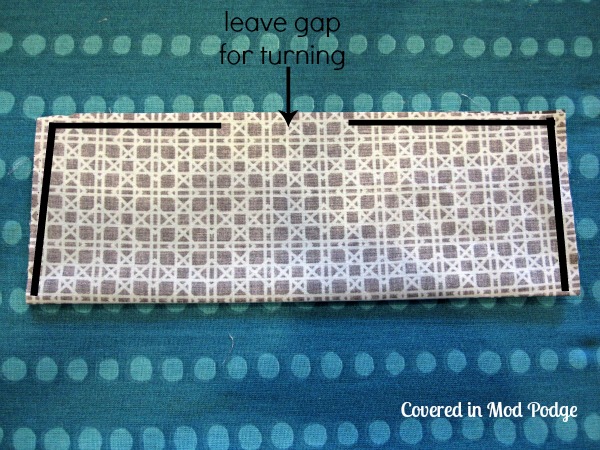
- Fold and Sew: Take one of your 8.5 x 10 inch strap pieces. Fold it in half lengthwise (“hot dog style”), with right sides together, so it measures 4.25 x 10 inches. Sew along the long raw edge using a 1/4 inch seam allowance. Crucially, leave a small gap (about 1.5-2 inches) in the middle of this long edge for turning the strap right side out. Sew both short ends closed.
- Turn, Press, and Topstitch: Carefully clip the corners of the strap to reduce bulk when turning. Using a turning tool or safety pin, turn the strap right side out through the gap you left. Press the strap thoroughly, making sure the edges are crisp and the turning gap is neatly folded in. Then, topstitch all around the entire perimeter of the strap, as close to the edge as possible. This closes the turning gap and gives the strap a professional, finished look.
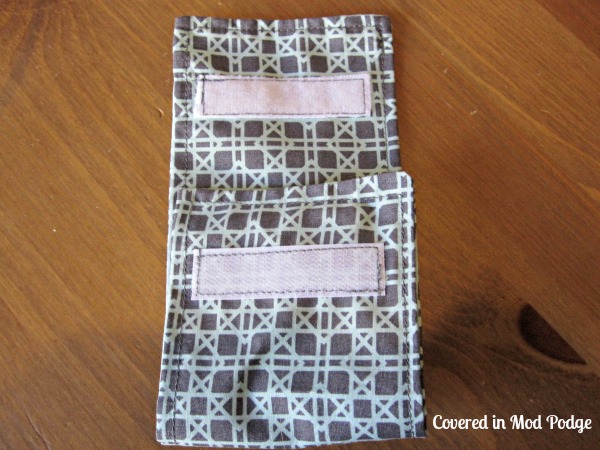
- Attach Velcro: Take one 3-inch strip of your Velcro. Sew one side of the Velcro (hook or loop, whichever you prefer) onto one end of the strap, on the side that will face the car seat handle. Sew the other corresponding Velcro piece to the opposite end of the strap, on the opposite side. This ensures the strap forms a secure loop. Refer to the image for proper placement.
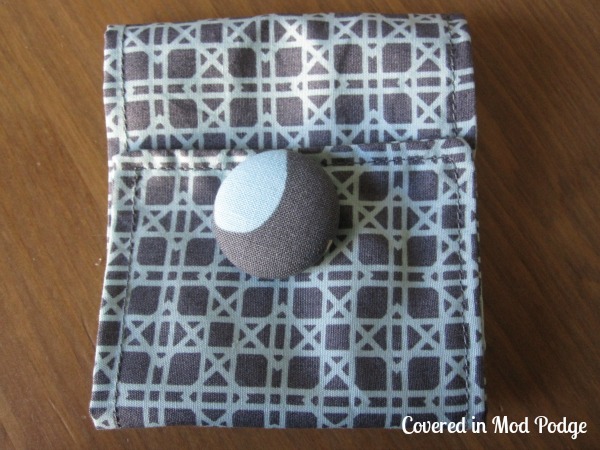
- Add Button: Hand sew one of your fabric-covered buttons onto the part of the strap that will be visible on top once it’s fastened around the car seat handle. This adds a charming decorative touch. Repeat all steps for the second strap.
Step 4: Creating the Peek-a-Boo Flap
The flap for the window adds a functional and adorable element, allowing you to peek in on your sleeping baby without fully opening the canopy.
- Sew Flap Pieces: Place your two 6 x 8 inch flap rectangles (one main fabric, one inside fabric) right sides together. If your fabric has a directional print, be mindful of how you want it to appear when the flap is open and closed. Sew around three sides using a 1/4 inch seam allowance, leaving a 1-inch gap on one of the 8-inch sides for turning.
- Turn, Press, and Topstitch: Clip the corners to reduce bulk. Turn the flap right side out through the opening. Use a point turner to achieve crisp corners. Press the flap well, ensuring the raw edges of the opening are neatly tucked inside. Topstitch around all four edges of the flap, as close to the edge as you can. This closes the turning gap and gives the flap a finished look.
Step 5: Cutting and Finishing the Window Opening
This step might seem a bit daunting, but with careful marking and cutting, it’s completely achievable, even for beginners. The window allows for easy peeks at your baby and adds a design element.
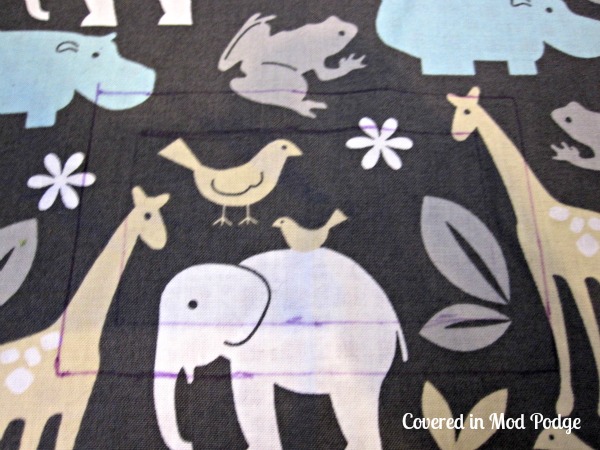
- Mark the Window Area: Lay your main canopy piece flat with the outside fabric facing up. Measure 14.5 inches in from one side and 14.5 inches up from the bottom edge. This marks your starting point. Using a disappearing ink pen or fabric chalk, draw a small 2 x 4 inch rectangle at this position. This is your inner cutting line.
- Draw the Outer Rectangle: Around the small 2 x 4 inch rectangle, draw a larger 3 x 5 inch rectangle, ensuring it is perfectly centered around the smaller one. This larger rectangle will serve as your guide for turning the fabric.
- Connect the Corners: Draw diagonal lines connecting the corners of the smaller 2 x 4 inch rectangle to the corresponding corners of the larger 3 x 5 inch rectangle. You should now have a smaller rectangle within a larger one, with diagonal lines extending from the inner corners to the outer corners.
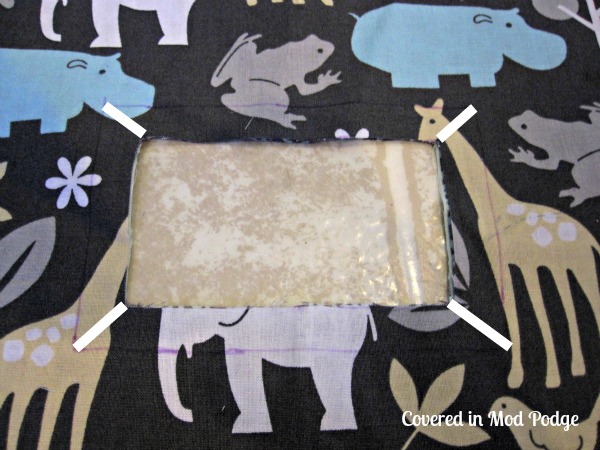
- Carefully Cut: Using sharp fabric scissors, **CAREFULLY** cut out the small, inner 2 x 4 inch rectangle. Once that’s removed, cut along the diagonal lines you drew, from the corners of the small rectangle outwards, stopping precisely at the lines of the larger 3 x 5 inch rectangle. **Do not cut past the outer rectangle’s outline!** This creates a “tab” at each corner.
- Turn and Press Edges: Turn the raw edges of the small rectangle inwards towards the back of the canopy, using the lines of the larger 3 x 5 inch rectangle as your guide. Press these edges well with an iron to create crisp folds. Pin them securely in place.
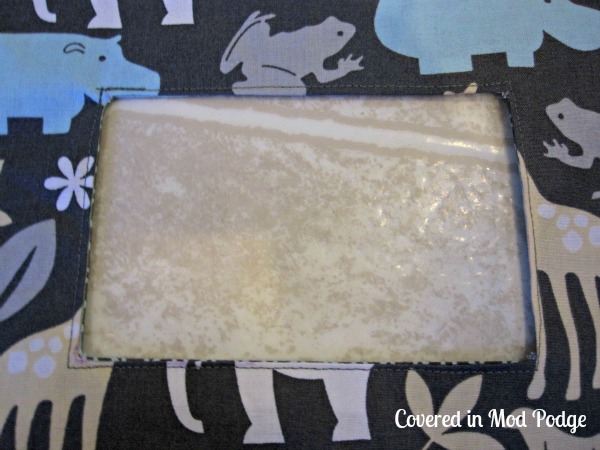
- Topstitch the Window: Once all edges are neatly folded and pressed, topstitch around the entire window opening, as close to the edge as you can. This secures the folded edges and gives your window a clean, professional finish.
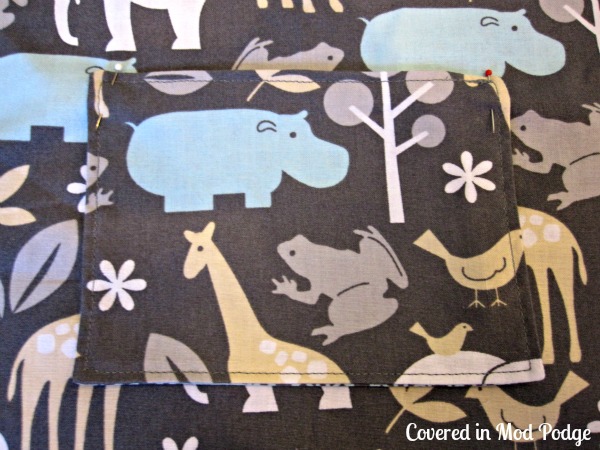
Step 6: Attaching the Flap and Straps
You’re in the home stretch! The final attachments bring all your hard work together.
- Add the Window Flap: Center your completed flap over the window opening you just created. Position it approximately 1/2 inch above the top edge of the window opening. This placement allows it to neatly cover the window when closed. Sew only along the very top edge of the flap, attaching it securely to the main canopy. Remember that the fabric you chose for the bottom side of the flap will be what shows when the flap is open, allowing you to peek at your sweet little baby.
- Attach the Straps: This step is best done with your actual car seat handy if possible. The ideal placement for the straps can vary slightly depending on the brand and model of the car seat. Drape your canopy over the car seat and mark where the straps would naturally loop around the car seat handle for a snug but not overly tight fit. If a car seat isn’t available, I found that sewing the straps approximately 20 inches up from the bottom edge of the canopy and 12 inches in from each side worked well. This measurement was effective on both my larger Britax car seat and the more standard-sized Graco seat this particular little man would be using. Sew the strap ends securely to the canopy body with a strong stitch, backstitching for reinforcement.
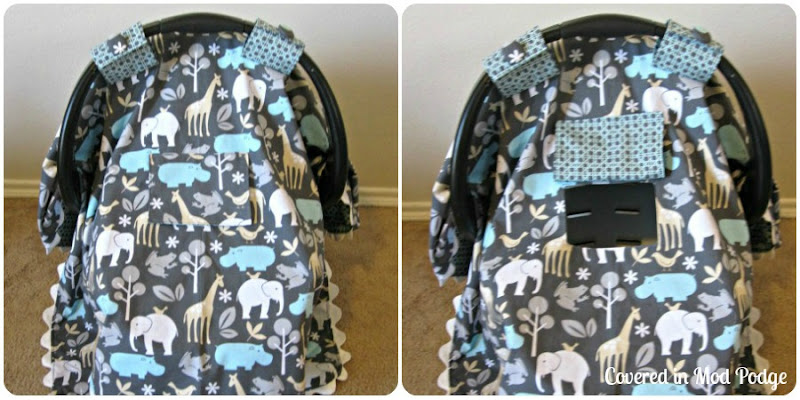
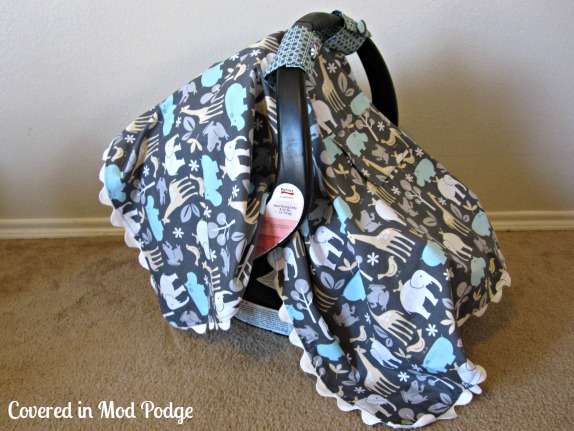
The Finished Product: A Labor of Love
Congratulations, you’ve done it! Your beautiful, handmade car seat canopy is now complete. This project is genuinely perfect for beginners, proving that even intricate-looking details like the window aren’t nearly as challenging as they might seem. Each step is broken down to be manageable, and the satisfaction of seeing your creation come to life is immense.
Why a DIY Car Seat Canopy is a Must-Have
Beyond the personal satisfaction of creating something with your own hands, a car seat canopy offers numerous benefits for both parent and baby:
- Protection from Elements: Shield your little one from harsh sunlight, brisk winds, light rain, and even snow. It helps maintain a comfortable temperature inside the car seat.
- Germ Barrier: In today’s world, a barrier against curious hands and airborne germs is invaluable, especially for newborns with developing immune systems.
- Privacy for Baby: Creates a cozy, enclosed space that minimizes distractions, helping your baby nap more easily while on the go. It also provides privacy for breastfeeding mothers.
- Style and Personalization: Choose fabrics that reflect your personal taste, match your nursery decor, or simply bring you joy. This is an opportunity to express your creativity and make a truly unique item.
- Thoughtful Gift: A handmade car seat canopy makes an incredibly thoughtful and cherished baby shower gift. It shows care, effort, and provides a highly practical item for new parents.
- Cost-Effective: Often, making your own canopy is more economical than purchasing a boutique version, allowing you to save money while still getting a high-quality product.
Happy Sewing! We hope this tutorial empowers you to create something beautiful and functional for the special little ones in your life. The joy of handmade items is truly unparalleled.
Enjoyed this project? Explore more of our fantastic baby-related tutorials to continue your crafting adventure!
For more inspiration and to connect with our community, follow us on Facebook!
Love this tutorial? Be sure to save it for later!