Mastering Weeknight Meals: The Essential Role of Menu Planning for Busy Families
The rhythm of life often shifts, sometimes subtly, sometimes dramatically. Recently, my own routine underwent a significant transformation as I stepped back into the world of full-time work, albeit temporarily. The juggle is real: navigating the bittersweet pangs of missing my little ones throughout the day, trading comfy loungewear for “real pants,” and embracing the welcomed boost of a second income. What truly hit me, though, was rediscovering the meticulous organization required to shepherd two energetic children out the door, fed and on time, every single morning. To every working parent out there, especially the incredible moms making it all happen – you are truly phenomenal!
In this dynamic new phase, I find myself more reliant than ever on a cornerstone of our household sanity: the humble, yet mighty, weekly menu plan. It’s no exaggeration to say that our carefully curated meal schedule has become an indispensable tool, a beacon of calm in what could otherwise be a chaotic storm of dinner dilemmas and last-minute takeaways. For anyone striving to balance career demands with family life, understanding the power of a well-executed meal plan isn’t just a convenience; it’s a game-changer.
Why Weekly Meal Planning is Non-Negotiable for Busy Households
The decision to embrace a weekly meal plan isn’t just about what’s for dinner tonight; it’s a strategic move that pays dividends across multiple facets of family life. For working parents, the benefits extend far beyond the kitchen, impacting time management, budget, health, and even mental well-being. Let’s delve into why this simple practice is an absolute must-have in your organizational toolkit.
1. Reclaiming Precious Time and Reducing Stress
Imagine this: You walk through the door after a long day, children buzzing with energy, and the age-old question, “What’s for dinner?” immediately looms. Without a plan, this often leads to frantic pantry searches, hurried decisions, or the tempting, yet often costly, call for takeout. A meal plan eliminates this daily scramble. Knowing exactly what you’re cooking takes away the decision fatigue and frees up valuable evening minutes that can be spent connecting with your family, helping with homework, or simply unwinding. It transforms dinner from a daily chore into a predictable, manageable part of your routine, significantly reducing evening stress.
2. Significant Financial Savings and Reduced Food Waste
Spontaneous grocery runs and impulse buys are notorious budgetbusters. When you plan your meals, you create a focused shopping list, ensuring you only purchase what you need. This strategic approach dramatically cuts down on wasted food, as ingredients are bought with specific recipes in mind. Furthermore, by planning ahead, you can incorporate ingredients that are on sale or in season, maximizing your savings. Over weeks and months, these small savings compound into a substantial difference, making meal planning a smart financial choice for any family.
3. Fostering Healthier Eating Habits
When you’re tired and hungry, the easiest option often isn’t the healthiest. A meal plan empowers you to make conscious, nutritious choices for your family’s diet. You can deliberately incorporate a variety of vegetables, lean proteins, and whole grains throughout the week. This proactive approach helps avoid the pitfalls of processed convenience foods and ensures your family is receiving balanced, home-cooked meals. It’s an investment in your family’s long-term health and well-being, providing consistent nourishment even on the busiest days.
4. Streamlining Grocery Shopping
One of the most immediate benefits you’ll notice is how much simpler grocery shopping becomes. With a detailed menu plan, your shopping list practically writes itself. You can quickly identify what ingredients you already have and what you need to buy. This efficiency means less time wandering aisles, fewer forgotten items, and more organized trips to the supermarket, whether you shop once a week or utilize online grocery services.
Crafting Your Own Effective Weekly Meal Plan
Embarking on the meal planning journey might seem daunting at first, but with a few practical strategies, it can quickly become an intuitive and rewarding habit. Here’s how to create a meal plan that works for your unique family dynamics and busy schedule:
1. Assess Your Family’s Preferences and Dietary Needs
Start by considering what your family actually enjoys eating. Involve everyone in the process, perhaps by asking each family member to suggest a favorite meal for the week. Take note of any allergies, dietary restrictions, or strong dislikes. A meal plan is most successful when it caters to the tastes of those you’re feeding, ensuring less resistance at dinner time.
2. Inventory Your Pantry and Fridge
Before heading to the grocery store, take a quick inventory of what you already have on hand. This helps prevent unnecessary purchases and encourages you to use up ingredients before they expire. It’s also a fantastic way to spark meal ideas – sometimes a forgotten can of beans or a half-used bag of pasta can be the starting point for a delicious dish.
3. Choose a Planning Method
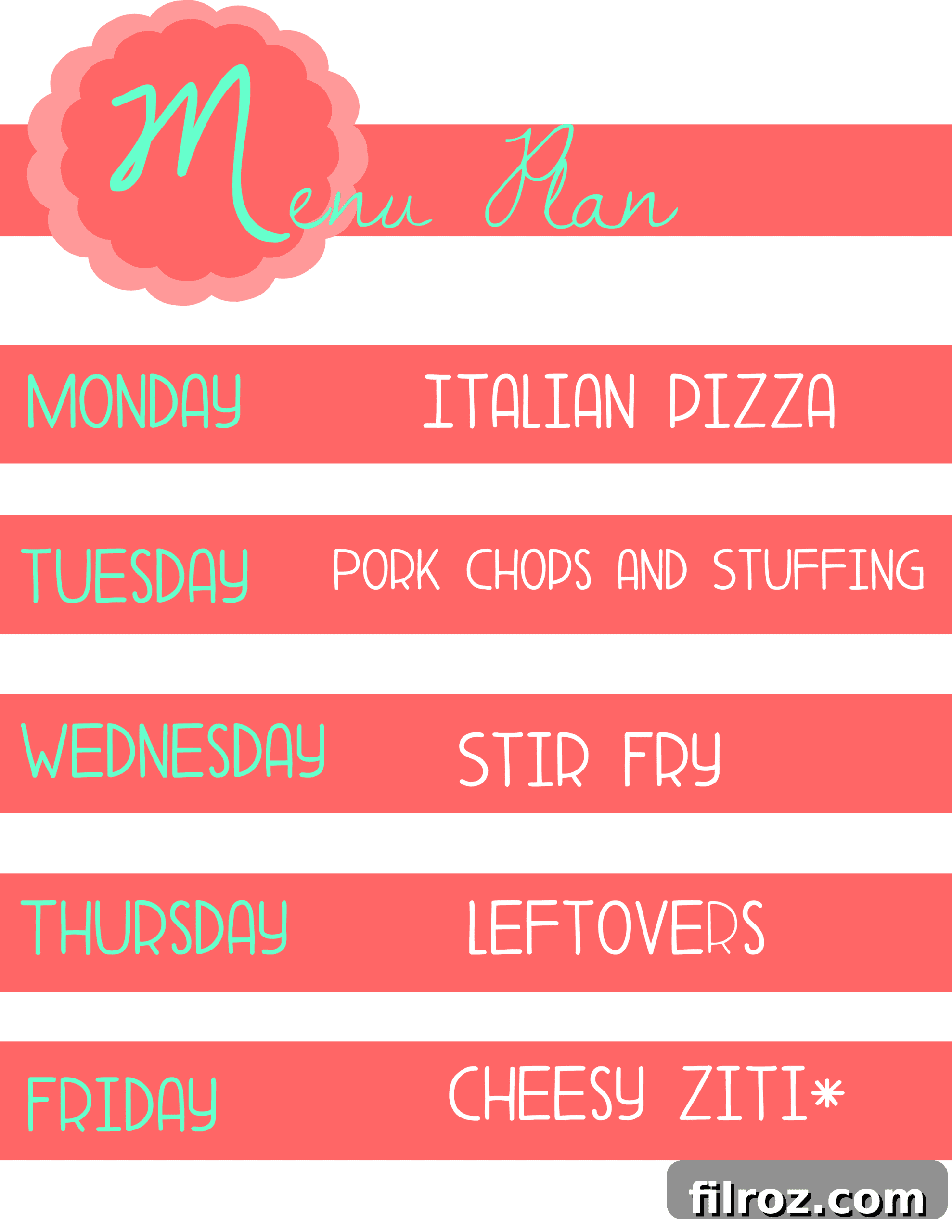
Whether you prefer a digital app, a simple notepad, or a printable template, find a method that resonates with you. Many people find visual planners, like the one linked below, incredibly helpful for seeing the entire week at a glance. What’s most important is consistency; choose a method you’ll stick with.
4. Incorporate Theme Nights and Quick Wins
To keep things interesting and simplify decision-making, consider theme nights. “Taco Tuesday,” “Pasta Thursday,” or “Meatless Monday” can be fun ways to structure your week. Also, be realistic about your time. On particularly busy days, plan for quick, minimal-prep meals. Batch cooking components like cooked chicken or chopped vegetables on a less hectic day can also save significant time during the week.
5. Don’t Be Afraid to Adjust
Life happens! There will be weeks when a planned meal doesn’t pan out. Maybe you’re too tired, or an unexpected event comes up. It’s perfectly fine to shuffle meals around or even opt for an easier alternative. The goal of meal planning is to reduce stress, not create more. Flexibility is key to its long-term success.
Navigating Work-Life Balance: More Than Just Meals
The challenge of balancing a demanding career with the responsibilities of family life is immense, and it’s a journey I’m deeply familiar with. That shout-out to working moms wasn’t just a casual remark; it comes from a place of deep respect and understanding. Beyond meal planning, effective time management and self-care are crucial.
Just last week, as I was still finding my footing with a 40-hour work week, my ambitious plan for a stir-fry simply didn’t materialize. And that’s okay. There are days when even the best-laid plans need to be set aside in favor of rest or unexpected needs. The key is not perfection, but resilience and a willingness to adapt.
Morning routines, for example, can be transformed by advance preparation: laying out clothes the night before, pre-packing lunches, or setting up breakfast ingredients. Evening routines can benefit from a similar structure, ensuring that everything is ready for the next day, minimizing morning rush, and maximizing those precious moments with your children before bedtime. Delegating tasks, even small ones, to other family members also lightens the load and fosters a sense of shared responsibility.
Delicious and Easy Weeknight Meal Inspiration
To help you get started or refresh your existing meal plan, here are a couple of ideas for simple, family-friendly dinners:
Cheesy Ziti: A Comforting Classic
One of our go-to recipes for a satisfying and relatively easy weeknight dinner is a hearty baked pasta. It’s the kind of dish that warms the soul and satisfies even the pickiest eaters. We often turn to variations of this, much like this delightful Cheesy Ziti Recipe. Baked pasta dishes are fantastic because they can often be prepared in advance and simply popped into the oven closer to dinner time, making them ideal for busy evenings.
Quick Stir-Fries: When Time is Short (and Plans Work Out!)
While my stir-fry plan didn’t make it to the table last week, it remains a fantastic option for a speedy and nutritious meal. The beauty of a stir-fry lies in its versatility: you can use whatever vegetables you have on hand, add your favorite protein (chicken, beef, tofu, or shrimp), and whip up a flavorful sauce in minutes. It’s a great way to use up leftover produce and get a healthy dinner on the table without much fuss, provided you have all your ingredients prepped.
Utilizing Resources: Printable Meal Planners
To aid in your meal planning endeavors, practical tools can make all the difference. If you’re looking for a structured way to lay out your meals, remember that a new menu planner printable is available from last week’s menu post. These printables offer a clear, visual layout for your weekly meals, grocery list, and even notes, serving as a tangible reminder of your plan and a motivator to stick to it.