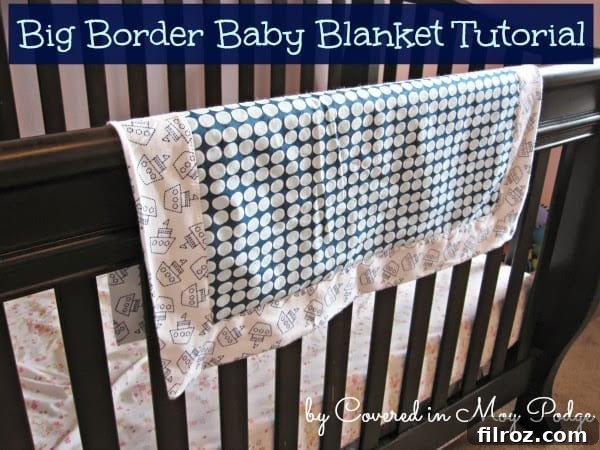
Craft a Cozy Masterpiece: Your Guide to the Big Border Flannel Baby Blanket
Hey there, fellow crafting enthusiasts! Michaela from Covered in Mod Podge is back with an exciting and incredibly rewarding project today. We’re diving into the delightful world of DIY baby blankets, specifically focusing on a charming design that features a generously sized border. This design isn’t just about creating warmth and comfort; it’s a fantastic opportunity to showcase two of your favorite flannel fabrics, making a truly unique and personalized gift.
Whether you’re an experienced sewist or just starting your journey with a sewing machine, this easy-to-follow tutorial will guide you through every step of creating a beautiful, handmade big border flannel baby blanket. Imagine the joy of wrapping a little one in something made with love and care. These blankets are not only practical and super soft but also incredibly quick to make once you get the hang of it – often in under 30 minutes, including cutting!
Why Choose a Big Border Flannel Baby Blanket?
A handmade baby blanket is more than just a piece of fabric; it’s a tangible expression of love. This particular “big border” design offers several advantages that make it a favorite among crafters:
- Showcases Two Fabrics: The prominent border design allows you to highlight two coordinating or contrasting flannel fabrics beautifully. This is perfect for theme-based blankets or when you simply can’t decide on just one adorable print!
- Luxurious Softness: Flannel is renowned for its incredible softness and warmth, making it the ideal choice for delicate baby skin. It provides a comforting snuggle, perfect for nap times, stroller rides, or tummy time.
- Durability: Flannel holds up exceptionally well to frequent washing, which is essential for any baby item. With proper care, your handmade flannel baby blanket will remain soft and lovely for years to come.
- Beginner-Friendly: Despite its professional look, this project uses straightforward sewing techniques, making it an excellent choice for those new to sewing. The step-by-step instructions are clear and easy to follow.
- Customizable Size: While we provide specific dimensions for a standard baby blanket, the design is highly adaptable. You can easily adjust the fabric measurements to create a larger toddler blanket or a smaller lovey.
- Thoughtful Gift: A homemade big border baby blanket makes an unforgettable baby shower gift. It’s personal, practical, and shows the recipient how much you care.
Gather Your Supplies: What You’ll Need
Before we dive into the creative process, let’s ensure you have all the necessary tools and materials at hand. Having everything ready will make your sewing experience smooth and enjoyable.
- 1 1/4 Yards of Flannel (Back Fabric): This will be the larger piece, forming the back of your blanket and the wide border on the front. Choose a soft, durable flannel in a print or solid that complements your contrasting fabric.
- 1 Yard of Contrasting Flannel (Front Fabric): This fabric will form the central panel on the front of your blanket. Pick a print that stands out against or beautifully harmonizes with your back fabric. Remember to pre-wash both flannel fabrics to prevent shrinkage and color bleeding later!
- Contrasting Thread (or Matching): While the original tutorial suggests contrasting thread for a visible design element, you can also opt for a thread color that matches your front fabric for a more subtle finish. Ensure it’s a good quality polyester thread for durability.
- Rotary Cutter & Mat: These tools are highly recommended for achieving precise, straight cuts, especially with flannel which can shift. If you don’t have these, sharp fabric scissors and a measuring tape will also work, but take extra care with your measurements.
- Long Ruler or Straight Edge: Essential for guiding your rotary cutter or drawing straight lines for cutting.
- Sewing Machine: A basic sewing machine with a straight stitch function is all you need.
- Fabric Pins or Clips: To hold your fabric layers securely in place while sewing.
- Iron & Ironing Board: Crucial for pressing seams and achieving a crisp, professional finish.
- Seam Ripper: Every sewist’s best friend – just in case a stitch goes astray!
Big Border Baby Blanket Tutorial: A Step-by-Step Guide
Now that your materials are ready, let’s get down to sewing! Follow these steps carefully for a beautiful outcome.
Step 1: Preparing Your Fabric for the Perfect Fit
Accuracy in cutting is key for this project to ensure your border is even and symmetrical. Begin by pre-washing and drying your flannel fabrics to account for any shrinkage. Then, press them smooth to remove wrinkles, which will help with precise cutting.
- Cut your back fabric: Measure and cut your main flannel fabric (the 1 1/4 yards piece) into a perfect 42-inch by 42-inch square. This will form the entire back of the blanket and the substantial border on the front.
- Cut your front fabric: Next, take your contrasting flannel fabric (the 1-yard piece) and cut it into a 32-inch by 32-inch square. This will be the eye-catching central panel on the front of your blanket.
- Understanding the Border: The difference in size (42 inches – 32 inches = 10 inches) means you’ll have 5 inches of the back fabric extending beyond the front fabric on each side. This creates the “big border” effect, allowing both fabrics to shine! Feel free to adjust these dimensions if you desire a different blanket size or border thickness. Just ensure your back fabric is consistently larger than your front fabric by your desired border width multiplied by two.
Step 2: Laying Out Your Fabrics for Sewing
Find a large, clean, and flat workspace – a dining table or even a clean floor works well. This step is crucial for accurate alignment.
- Position the back fabric: Lay your 42×42-inch back fabric down first, ensuring the right side (the printed or “pretty” side) is facing up. Smooth out any wrinkles.
- Place the front fabric: Now, take your 32×32-inch front fabric and place it on top of the back fabric. Crucially, the right side of the front fabric should be facing down, against the right side of the back fabric.
- Center on one edge: Align the front fabric so that one of its edges is perfectly centered along one edge of the back fabric. This means you will have 5 inches of the back fabric extending beyond the front fabric on either side of that edge. Use your ruler to ensure accuracy and pin generously along this edge to keep the layers from shifting.
Step 3: Sewing the First Three Sides with Precision
It’s time to start sewing! This technique involves sewing one side at a time, repositioning the inner fabric, and then sewing the next side. This is how the mitered corners are formed without traditional corner cuts at this stage.
- Sew the first edge: Using a standard seam allowance (usually 1/4 inch or the edge of your presser foot), sew along the pinned edge where the front and back fabrics meet. It’s crucial to start and stop your seam 1/4 inch from both the beginning and the end of the front fabric’s edge. This small unsewn portion at each end is vital for creating neat mitered corners later. Don’t forget to backstitch at the beginning and end of your seam to secure the stitches.
- Reposition for the second side: Move your blanket back to your flat workspace. Now, you need to center your front fabric along the *next* adjacent edge of your back fabric. When you do this, you’ll notice a triangle of the back fabric will naturally form at the corner where you just sewed. This is exactly what you want! Again, ensure you have 5 inches of the back fabric extending beyond the front fabric on either side of this new edge. Pin securely.
- Sew the second and third sides: Just as before, sew along this new pinned edge, starting and stopping 1/4 inch from each end, and remember to backstitch. Repeat this process for the third side of your blanket, repositioning and centering the front fabric, then sewing with the same 1/4-inch unsewn gap at the start and end.
Step 4: Creating the Turning Gap on the Fourth Side
The fourth side is sewn similarly, but with a crucial difference: you’ll need to leave an opening for turning your blanket right side out.
- Sew the fourth edge, leaving a gap: Just like the previous sides, center your front fabric on the final edge of the back fabric. Sew along this edge, again starting and stopping 1/4 inch from the ends. However, this time, you will leave a 5-inch (or roughly hand-width) unsewn gap in the middle of this seam. This opening will be used to turn the blanket right side out after the corners are finished. Remember to backstitch firmly at the beginning and end of both stitched segments on this fourth side.
Step 5: Mastering the Mitered Corners for a Professional Finish
This is where the magic of the big border blanket truly comes alive. Trimming the corners correctly will give you a crisp, clean finish.
- Prepare a corner triangle: At each of the four corners, you’ll see a triangle of excess back fabric extending beyond the stitched seams of your front fabric. Carefully pull this excess back fabric outward to form a distinct triangle.
- Fold and cut: Take the very tip of this fabric triangle and fold it down precisely to the edge where your front fabric begins. This fold should align perfectly with the corner point of your front fabric. Press this fold firmly with your fingers.
- Sew the corner: Now, carefully cut along this folded line. You’ve just created a new raw edge. Take your blanket back to the sewing machine and sew along this newly cut open edge. This seam should run from the end of one of your previously stitched lines to the beginning of the next, effectively closing off that corner. Backstitch at the beginning and end of this seam.
- Repeat for all corners: Repeat this folding, cutting, and sewing process for all four corners of your blanket. This technique ensures perfectly mitered corners once the blanket is turned right side out.
Step 6: Turning and Pressing for a Crisp Finish
Now for the satisfying moment when your blanket starts to take shape!
- Turn the blanket: Reach into the 5-inch gap you left on the fourth side and carefully pull all the fabric through until the blanket is right side out.
- Push out the corners: Use a blunt tool (like a point turner, a chopstick, or the end of your rotary cutter handle) to gently push out all four corners from the inside. Be careful not to push too hard, which could poke through your stitches. You want nice, crisp points.
- Press thoroughly: Take your blanket to the ironing board. Press the entire blanket well, smoothing out all the seams. Pay special attention to the turning gap; fold the raw edges inward so they align perfectly with the rest of the seam, creating a clean, unstitched edge ready for closing.
- Ensure crisp corners: Double-check that all your corners are pushed out completely and form sharp, clean angles after pressing. This contributes significantly to the professional look of your big border baby blanket.
Step 7: The Finishing Touches: Topstitching and Closing the Gap
Topstitching not only gives your blanket a polished look but also securely closes the turning gap and adds durability.
- Topstitch around the border: Carefully topstitch all the way around the entire blanket. Your stitch line should be close to the seam where the front fabric meets the border of the back fabric. This will create a neat line and, most importantly, securely close the turning gap you left earlier. Take your time, especially around the corners, to maintain an even stitch line. Backstitch at the beginning and end of your topstitching to reinforce it.
Pro Tips for a Perfect Flannel Baby Blanket
To ensure your big border flannel baby blanket turns out beautifully every time, keep these expert tips in mind:
- Pre-wash Flannel: Flannel is notorious for shrinking, so always pre-wash and dry your fabric before cutting. This prevents your finished blanket from distorting after its first wash.
- Press, Press, Press: Ironing at each stage (after cutting, after sewing each seam) makes a huge difference in the final appearance. It helps seams lay flat and ensures crisp corners.
- Use Plenty of Pins: Flannel can be shifty. Use ample pins or fabric clips to keep your layers aligned, especially when sewing long seams.
- Choose a Walking Foot: If you have one, a walking foot can be incredibly helpful when sewing with flannel, as it feeds both layers of fabric through the machine evenly, reducing puckering and shifting.
- Consistent Seam Allowance: Strive for a consistent seam allowance throughout your project. This is key to ensuring your blanket lies flat and your border is even.
- Slow and Steady: Especially when you’re learning, sew slowly. This allows for better control and more accurate stitches. There’s no rush when creating something special!
- Safety First: If this blanket is for an infant, avoid adding any small embellishments that could become choking hazards. Keep it simple, soft, and secure.
Personalize Your Creation: Customization Ideas
One of the greatest joys of DIY is the ability to customize. Here are some ideas to make your big border baby blanket truly unique:
- Fabric Choices: Experiment with different types of fabric! While flannel is perfect for warmth, you could also use soft cottons, minky fabric (for one side, but be aware of its stretchiness), or even a combination for varied textures.
- Size Variations: Adjust your initial fabric cuts to make smaller security blankets (loveys) or larger toddler/throw blankets. Just maintain the consistent difference in size between your front and back fabrics to keep that distinct border.
- Add Embellishments: Before sewing the front and back fabrics together, consider adding appliqué shapes, embroidery, or even a name in heat transfer vinyl to the central front panel.
- Quilting/Tying: For extra durability and to prevent the layers from shifting during washing, you can “quilt” your blanket. A simple method is to add small ties (using embroidery floss or yarn) through all layers at regular intervals (e.g., every 6-8 inches) across the blanket.
- Decorative Stitching: Use a decorative stitch setting on your sewing machine for the topstitching to add an extra touch of flair to the border.
Making the Most of Your Fabric: Scraps and Beyond
Don’t let those leftover fabric scraps go to waste! Even small pieces of flannel can be transformed into adorable coordinating items, extending the utility and charm of your initial fabric choices.
- Matching Bows: As pictured, a simple strip of fabric can be tied into a sweet bow to adorn the finished blanket, creating a beautifully coordinated presentation, especially if you’re gifting it.
- Burp Cloths: Stitch together two layers of flannel scraps, turn right side out, and topstitch to create absorbent and soft burp cloths that perfectly match your blanket.
- Small Toys or Teethers: With a bit more effort, you can sew small, soft shapes (like stars or clouds) from your flannel scraps, stuff them lightly, and create adorable baby-safe toys.
- Small Sachets: Fill tiny flannel bags with lavender or other gentle, natural scents for a calming addition to a nursery (ensure they are securely closed and out of reach of infants).
Wrap Up Your Project with Pride!
And there you have it! A beautiful, handmade big border flannel baby blanket, crafted with your own two hands. This project is not only satisfying to create but also results in a wonderfully practical and cherished item. Once you’ve made one, you’ll see just how quickly and easily these come together, making them perfect for last-minute baby shower gifts or adding to your stock of handmade goodies.
We hope you enjoyed this sewing tutorial and feel inspired to create many more cozy blankets. Share your creations with us – we love seeing how you personalize your projects! Happy sewing!
Explore More Creative Projects from Michaela
If you loved this tutorial, be sure to check out more amazing sewing projects and creative ideas from Michaela at Covered in Mod Podge. There’s always something new to inspire your next handmade adventure!
Love it? PIN IT!