If you’re anything like me, the kitchen is your happy place, especially when it comes to baking. There’s an unparalleled joy in experimenting with new flavors, perhaps putting a fresh twist on a beloved family recipe, or even conjuring something entirely original from scratch. I could easily lose myself for hours, whisking, mixing, and creating delightful treats for my loved ones. While the adventure of culinary innovation is exciting, there are always those comforting, tried-and-true recipes that consistently draw me back. They are the anchors in a sea of culinary exploration, offering dependable deliciousness every time.
Among these cherished staples, one recipe stands out as an absolute essential in my baking repertoire: my basic butter cake. This isn’t just any cake; it’s a remarkably versatile and undeniably delicious foundation that I turn to again and again. Its simplicity belies its incredible flavor and perfect texture, making it the ideal canvas for countless dessert creations. Whether I’m looking for a comforting treat or the base for an elaborate celebration cake, this recipe delivers consistent, mouth-watering results.
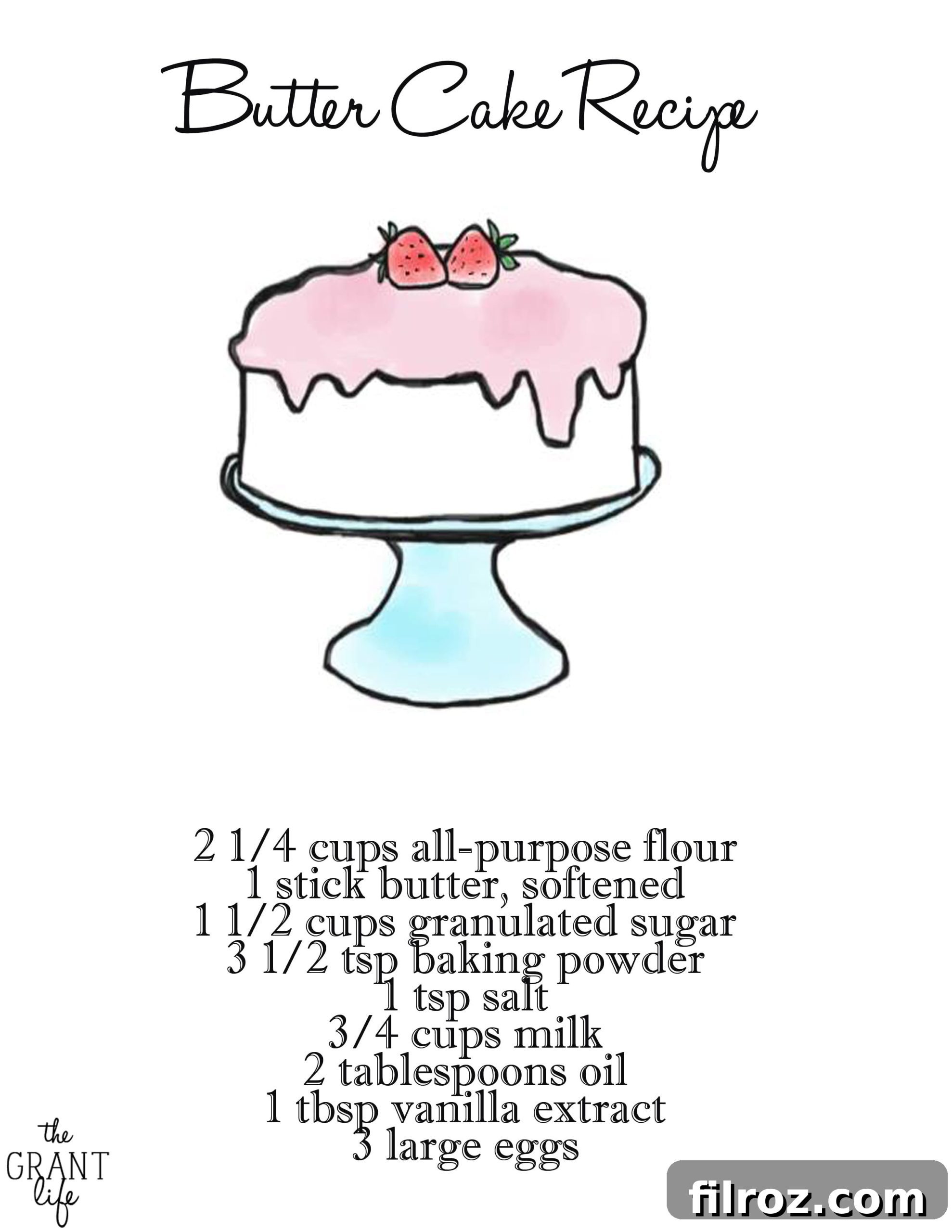
Because I believe every baker deserves access to such a reliable and wonderful recipe, I’ve transformed it into a beautiful, easy-to-use printable. Say goodbye to sticky screens or rushing back and forth to your computer in the middle of a baking frenzy. With this printable, you can have all the essential steps and ingredients right at your fingertips, making your baking experience smoother and more enjoyable. It’s perfect for those moments when you want to dive into baking without any digital distractions.
Why This Basic Butter Cake Recipe is Your New Go-To
What makes a recipe a true “keeper”? For me, it’s a combination of simplicity, reliability, and sheer deliciousness. This basic butter cake recipe embodies all these qualities and more. It’s designed to be straightforward, even for novice bakers, yet yields a cake that tastes anything but basic.
The secret lies in its perfectly balanced ingredients and simple method, resulting in a cake that is wonderfully moist, tender, and rich with the classic flavor of butter and vanilla. It holds its shape beautifully, making it ideal for layering and decorating, and its subtle sweetness allows it to pair perfectly with almost any frosting or topping you can imagine. This isn’t just a cake; it’s a foundation for culinary creativity, a blank slate waiting for your personal touch. It’s a recipe that promises success every time, turning ordinary moments into sweet celebrations.
Embrace the Convenience of Kitchen Printables
I confess, I have a deep affection for kitchen printables. They are not merely functional tools but also fantastic, effortless pieces of decor that add a touch of charm and personality to your culinary space. My kitchen proudly displays a set of ingredient substitution printables – a real lifesaver for those impromptu baking sessions when you realize you’re missing a key item! (Being the “substitution queen” has its perks, and these printables are my crown jewels.)
Now, I’m thrilled to announce that this essential basic butter cake recipe is joining my collection of cherished kitchen wall art. Imagine having your favorite cake recipe beautifully displayed, ready for quick reference without the hassle of unlocking a phone or navigating a website. It’s a small touch that makes a big difference in the efficiency and enjoyment of your baking. This printable isn’t just a guide; it’s a statement piece that celebrates the joy of homemade goodness, offering both beauty and practicality in one delightful package.
How to Get Your Free Printable Butter Cake Recipe
Getting your hands on this fantastic printable is incredibly simple. Just click on the image above, save the file to your computer, and then print it out. It’s designed to print perfectly on a standard sheet of paper, ensuring clarity and readability. For those who love a more premium feel, consider printing it on cardstock. Not only does this give the recipe card a more substantial and durable quality, but it also elevates its look, making it even more suitable for display.
I personally love to hang my printables on a rustic clipboard, which is then proudly displayed on my kitchen wall. It’s a charming and practical setup – not overly elaborate, but it adds a lovely farmhouse-chic touch and keeps my essential baking guides easily visible and accessible. I’m contemplating a similar display method for this new cake recipe printable, and I highly recommend trying it yourself. But however you choose to display yours, once it’s printed, you’ll be all set to bake some truly delightful butter cakes, turning your kitchen into a haven of sweet aromas and delicious creations!
Classic Basic Butter Cake Recipe
An easy-to-follow recipe for a perfectly moist and fluffy butter cake, ideal for any occasion.
Ingredients You’ll Need
- 2 1/4 cups all-purpose flour
- 1 stick (1/2 cup) unsalted butter, softened to room temperature
- 1 1/2 cups granulated sugar
- 3 1/2 tsp baking powder
- 1 tsp salt
- 3/4 cups whole milk
- 2 tablespoons vegetable oil (or other neutral oil)
- 1 tbsp pure vanilla extract
- 3 large eggs, at room temperature
Step-by-Step Baking Instructions
- Prepare Your Oven and Pans: Preheat your oven to 350°F (175°C). Lightly grease and flour two 8 or 9-inch round cake pans, or spray thoroughly with a non-stick baking spray containing flour.
- Cream Butter and Sugar: In a large mixing bowl, using an electric mixer, cream together the softened butter and granulated sugar on medium speed until the mixture is light, fluffy, and pale in color. This process typically takes about 3-5 minutes and incorporates air, contributing to the cake’s light texture.
- Incorporate Eggs: Add the large eggs one at a time, beating well after each addition. Make sure each egg is fully incorporated before adding the next. Scrape down the sides of the bowl as needed to ensure everything is evenly mixed.
- Add Wet Ingredients: Stir in the vanilla extract, vegetable oil, and milk. Mix until just combined. The mixture might look a little curdled at this stage, but don’t worry, it will smooth out once the dry ingredients are added.
- Combine Dry Ingredients: In a separate bowl, whisk together the all-purpose flour, baking powder, and salt. This ensures that the leavening agents and salt are evenly distributed throughout the flour.
- Combine Wet and Dry: Gradually add the dry ingredients to the wet mixture, mixing on low speed until just combined. Be careful not to overmix; overmixing can develop the gluten in the flour too much, resulting in a tough cake. Mix only until no visible lumps of flour remain.
- Pour into Pans: Divide the batter evenly between the two prepared cake pans. Gently tap the pans on the counter a couple of times to release any large air bubbles.
- Bake to Perfection: Bake for 20-25 minutes, or until a wooden skewer or toothpick inserted into the center of the cakes comes out clean. The cakes should be lightly golden brown and spring back when gently pressed.
- Cooling Process: Let the cakes cool in their pans on a wire rack for about 10-15 minutes before inverting them onto the wire rack to cool completely. Ensure they are fully cooled before frosting, otherwise your frosting will melt.
- Frost and Enjoy: Once completely cool, frost as desired and serve!
Did you bake this delightful butter cake? We’d love to hear from you! Share your experience and photos on social media. Your feedback helps our baking community grow and inspires others to create delicious treats. Tag us with #MomMakesDinnerBakes and let us know how your cake turned out!
Expert Baking Tips for a Flawless Butter Cake
Achieving a perfect butter cake every time is easier than you think with these professional baking tips:
- Room Temperature Ingredients: This is crucial! Ensure your butter, eggs, and milk are at room temperature. This helps them emulsify better, creating a smoother, more uniform batter and ultimately a lighter, fluffier cake. Cold ingredients can cause the batter to curdle and prevent even mixing.
- Accurate Measurements: Baking is a science! Use proper measuring cups and spoons, and for best results, weigh your dry ingredients using a kitchen scale. Precision in measurement is key to the correct texture and rise.
- Don’t Overmix: Mix your batter only until the ingredients are just combined. Overmixing develops the gluten in the flour too much, which can lead to a tough, dense cake with a less desirable texture.
- Proper Pan Preparation: Always grease and flour your pans thoroughly, or use parchment paper on the bottom, to prevent sticking and ensure easy release. This step saves you frustration later on!
- Oven Temperature: Invest in an oven thermometer. Many ovens run hotter or colder than their display indicates, and an accurate temperature is crucial for even baking and proper rising. Uneven heat can lead to sunken centers or dry edges.
- The Toothpick Test: The classic test for doneness is inserting a wooden skewer or toothpick into the center of the cake. If it comes out clean or with a few moist crumbs attached (but no wet batter), your cake is ready. If it’s still wet, bake for a few more minutes and test again.
- Cooling is Key: Allow cakes to cool completely on a wire rack before frosting. Attempting to frost a warm cake will result in melted, messy frosting and could ruin the structural integrity of the cake. Patience here pays off!
Delicious Variations and Customizations
This basic butter cake recipe is incredibly versatile, serving as a perfect base for a myriad of flavor combinations. Here are a few ideas to inspire your creativity and personalize your next bake:
- Citrus Zest: Add 1-2 tablespoons of finely grated lemon, orange, or lime zest to the batter for a bright, refreshing flavor that cuts through the richness of the butter.
- Almond Extract: Substitute half of the vanilla extract with almond extract for a subtle, sophisticated, and nutty flavor profile. This pairs wonderfully with a berry topping.
- Chocolate Chip: Fold in 1 cup of mini chocolate chips during the final mixing stage for a delightful chocolatey surprise in every bite. Dark, milk, or white chocolate chips all work beautifully.
- Spice Cake: Incorporate 1 teaspoon of ground cinnamon and 1/2 teaspoon of nutmeg (and a pinch of cloves if you like) for a warm, comforting spice cake, perfect for autumn.
- Cupcakes: This recipe works beautifully for cupcakes! Simply line a muffin tin with paper liners, fill each liner two-thirds full, and bake for 18-22 minutes, or until a toothpick comes out clean. Adjust baking time accordingly.
- Fruit Swirl: Gently swirl in 1/2 cup of fruit puree (like raspberry or strawberry) or a berry compote into the batter just before baking for a vibrant fruity twist and a beautiful marbling effect.
- Coconut Delight: Add 1/2 cup of shredded coconut to the batter and consider a cream cheese frosting for a tropical-inspired treat.
Serving Suggestions for Your Perfect Butter Cake
A classic butter cake is a joy on its own, but it also provides a wonderful canvas for various toppings and accompaniments, enhancing its flavor and presentation. Here are some delectable ideas:
- Classic Buttercream: A simple vanilla buttercream or a rich chocolate buttercream is always a winner, offering a smooth, sweet finish that complements the cake’s texture.
- Fresh Berries: Serve slices with a generous helping of fresh strawberries, blueberries, or raspberries and a dollop of freshly whipped cream for a light and elegant dessert.
- Lemon Glaze: A tangy lemon glaze (made with powdered sugar and lemon juice) can add a bright, zesty contrast to the rich butter flavor, making the cake feel lighter and more refreshing.
- Ice Cream: A warm slice of butter cake with a scoop of premium vanilla bean ice cream or a complementary flavor like strawberry or coffee is a truly decadent treat.
- Fruit Compote: A homemade fruit compote (like cherry, peach, or mixed berry) can elevate the cake to a gourmet dessert, adding moisture and a burst of fruity flavor.
- Simple Dusting: Sometimes, all it needs is a light dusting of powdered sugar for an elegant, understated presentation that highlights the cake’s natural beauty.
- Chocolate Ganache: Drizzle or fully cover your cooled cake with a silky chocolate ganache for an undeniably rich and impressive finish.
Frequently Asked Questions About Baking Butter Cake
Here are answers to some common questions that arise when baking a classic butter cake:
- Q: Can I use salted butter instead of unsalted?
- A: While unsalted butter gives you more control over the salt content in your recipe, you can use salted butter. If you do, just reduce the added salt in the recipe by about 1/4 to 1/2 teaspoon to avoid an overly salty flavor.
- Q: Why did my cake sink in the middle?
- A: Common reasons for a cake sinking include opening the oven door too early (which causes a sudden temperature drop), overmixing the batter, using too much leavening agent (baking powder), or an incorrect oven temperature (too low can cause it to collapse). Ensure your oven is accurately calibrated and avoid opening the door during the first two-thirds of baking time.
- Q: How do I store leftover butter cake?
- A: Store unfrosted cake layers at room temperature, tightly wrapped in plastic wrap or foil, for up to 2-3 days. Frosted cake can be stored in an airtight container at room temperature for up to 3 days, or in the refrigerator for up to 5 days. For best texture, bring refrigerated cake to room temperature before serving.
- Q: Can I freeze butter cake?
- A: Yes! Unfrosted cake layers can be tightly wrapped in plastic wrap and then foil, and frozen for up to 2-3 months. Thaw frozen cake in the refrigerator overnight or at room temperature for a few hours before frosting and serving. Frosted cake can also be frozen, but it’s best to freeze it uncovered until the frosting is firm, then wrap it tightly.
- Q: What does “cream the butter and sugar” mean?
- A: Creaming butter and sugar together involves beating them with an electric mixer until the mixture becomes light, fluffy, and significantly paler in color. This process incorporates air into the butter, which is crucial for a light and tender cake texture.
Like this post and craving more delicious inspiration? Be sure to explore some of our other fantastic recipes and printable resources:
- Strawberry Cake with Lemon Buttercream Frosting (Yes, I used this very basic cake recipe and simply added strawberries for a fresh twist!)
- Delicate Ricotta Cake with Strawberry Pineapple Compote
- Irresistible Reese’s Brownies: An Easy Homemade Recipe
- And don’t forget to check out our Ingredient Substitution Printables for those moments when you’re missing an item!
Never Miss a Delicious Recipe – Subscribe to Our Newsletter!
Don’t want to miss out on our latest recipes, expert baking tips, and exclusive printable delights? Sign up for our email newsletter today! As a special thank you, you’ll also get immediate access to our FREE ingredient substitution printable, an invaluable tool for every home baker. Join our growing community of food lovers and let’s bake something wonderful together!