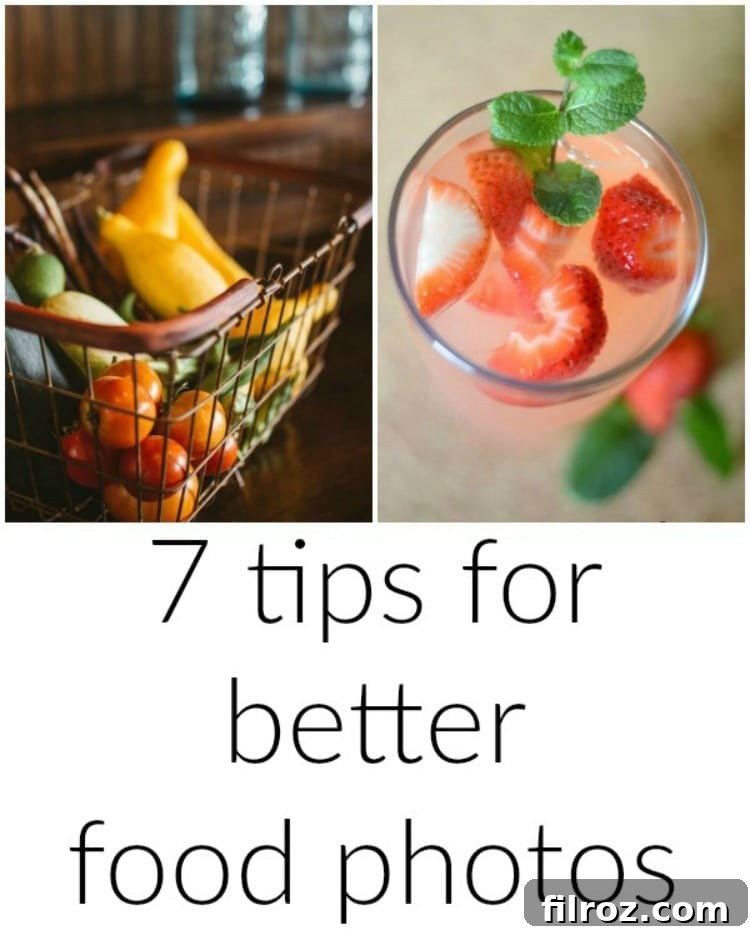
Elevate Your Culinary Creations: 7 Essential Tips for Stunning Food Photography
Are you ready to transform your food photos from ordinary to extraordinary? Whether you’re a food blogger, a home cook sharing recipes, or simply someone who loves capturing delicious moments, mastering food photography is an incredibly rewarding journey. In today’s visual-first world, a captivating image can truly make a dish sing, enticing viewers to try your recipes or simply admire your culinary artistry. We’ve compiled 7 easy-to-follow tips that will help you enhance your food photography skills, no matter your current experience level or equipment.
The journey to capturing mouth-watering food photos is an exciting one, blending technical know-how with creative vision. It’s a challenge to achieve that perfect shot, but the satisfaction when you do is immense. If you’re looking to significantly improve your food photography game – or any photography for that matter – these practical tips will guide you every step of the way.
1. Practice Consistently: The Foundation of Food Photography Mastery
If there’s one golden rule in photography, it’s this: practice, practice, practice! No matter what type of camera you own, from a high-end DSLR to the latest smartphone, consistent practice is the single most effective way to refine your craft. Every click of the shutter is an opportunity to learn and grow. Don’t wait for a special occasion; photograph your everyday meals, from a simple breakfast to an elaborate dinner, or even those freshly baked chocolate chip cookies cooling on the counter.
Delve into your camera’s manual to understand its functions beyond auto mode. Experiment with different angles, compositions, and settings. Try shooting the same dish from multiple perspectives – overhead, straight on, or at a 45-degree angle – to see which best highlights its textures and presentation. Invest in reliable memory cards so you never have to hold back on taking as many shots as you need. The more you shoot, the more instinctively you’ll understand light, composition, and styling, leading to a natural improvement in your food photos over time. Remember, every master photographer started with a single shot.
2. Research and Seek Inspiration: Fueling Your Creative Vision
Effective research is a two-pronged approach when it comes to food photography: visual and educational. Both are crucial for developing your unique style and technical prowess.
Visual Inspiration: Cultivating Your Aesthetic Eye
Visual research is about actively observing and analyzing appealing food imagery. Whenever you encounter a food photograph that captivates you – be it in a magazine, on Pinterest, Instagram, or even a restaurant menu – pause and study it. Ask yourself: What makes this image so appealing? What props were used, and how do they complement the dish? Is the background eye-catching, or does it subtly enhance the main subject? Pay attention to the lighting, the color palette, and the overall mood conveyed. By dissecting images you admire, you can identify elements and styles that resonate with you and work on incorporating similar techniques into your own food photography.
For example, I’ve always been drawn to close-up, overhead shots of beverages. There’s a playful intimacy to them. After seeing countless examples in food blogs and on Pinterest, I began practicing this specific angle more frequently. The image above, from my iced Thai latte post, demonstrates this perspective, showcasing how a specific visual inspiration can be translated into your work.
Educational Research: Mastering the Technical Side
The second category of research focuses on mastering photography techniques. Platforms like Pinterest, YouTube, and specialized photography blogs are treasure troves for learning. Search for educational content on fundamental concepts like aperture, ISO, and shutter speed. These three elements form the exposure triangle and are critical for controlling how your camera captures light and detail. Pick one topic at a time, read a few articles or watch tutorials, and truly understand how that technique works. Once you grasp the theory, make a conscious effort to apply what you’ve learned during your next food photography session. Experimenting with depth of field (controlled by aperture), managing noise in low light (ISO), or freezing motion (shutter speed) will dramatically improve the quality and artistic control of your images.
3. Master Your Current Gear Before Upgrading
There’s a common misconception that you need the most expensive, state-of-the-art camera to capture stunning photographs. This couldn’t be further from the truth. The best camera you can have is the one you own right now. Whether it’s a simple point-and-shoot, an older DSLR model, or even just your smartphone, focusing on mastering its capabilities will yield far greater improvements than constantly chasing the latest model.
Before considering an upgrade, truly understand your current camera’s strengths and limitations. Learn about its settings, experiment with its different modes, and develop your eye for composition and lighting. Once you’ve reached the limits of your current equipment – feeling confident in manual controls, understanding how to manipulate light, and consistently producing high-quality images – then it’s an excellent time to look into upgrading. A new model will then feel like a natural progression, providing you with more advanced features and greater control to execute the sophisticated techniques you’ve already mastered.
My own journey began with a basic point-and-shoot camera, then transitioned to my phone, and eventually, I upgraded to a Nikon D7000. The photograph above, showcasing my Finnish pancake recipe, was taken with my old cell phone several years ago. Compare it to the image below, a butternut squash pasta dish, captured with my Nikon. The difference is significant, but it’s important to remember that there are three years of dedicated practice and learning between these two photographs, not just a camera upgrade.
4. The Power of Props: Telling a Story with Your Food
Oh, how I adore props! They are the unsung heroes of food photography, capable of transforming a simple, perhaps “boring” food shot into an exciting and narrative-rich image. Props add context, texture, color, and a sense of storytelling to your culinary creations. The options are virtually limitless, allowing for incredible creativity.
You can start with the basics: a beautifully textured plate, a rustic wooden board, or a casually folded linen napkin can make a huge difference. I often incorporate silverware into my shots; it subtly suggests that the food is about to be enjoyed, adding an inviting, immediate quality to the scene. Think beyond just the serving dish: an extra serving of the main ingredient, the casserole dish it came from, or a sprinkle of fresh herbs can all serve as wonderful props. Even a strategically placed tea towel or a vintage fork can elevate the entire composition. Props are an extension of your creative vision, helping to set the mood and enhance the visual appeal of your food.
For ingenious ideas on using everyday items, check out Pinch of Yum’s fantastic post on ten household items that can improve your food photography. Old cookie sheets, for instance, often provide a wonderful, lived-in texture. Don’t be afraid to play around with different props and arrangements to discover your unique styling voice. My favorite places to hunt for unique and affordable props are World Market and local thrift stores; you never know what treasures you’ll find to perfectly complement your next dish.
5. Harnessing the Magic of Natural Light
Natural light is arguably the most powerful and easiest tool to dramatically improve your food photography. It’s free, readily available, and inherently beautiful, bringing out the best colors, textures, and depth in any photograph. The soft, diffused glow of natural light creates an inviting and realistic portrayal of food that artificial, harsh lighting simply cannot replicate.
Start by scouting your home for the best natural light source. Look for a window that provides consistent, indirect light – typically not direct sunlight, which can be too harsh and create strong shadows. A coffee table or a small dining table placed near a large window often makes an ideal setup. Position your food and props so the light falls from the side or slightly behind your subject. This side-lighting or back-lighting technique adds dimension and highlights the food’s contours and textures beautifully.
Crucially, do not – I repeat, DO NOT – rely on your kitchen’s overhead lights or any other artificial home lighting for your photography. These lights often cast unflattering yellow or orange tones and create harsh, undesirable shadows, flattening your image. If natural light is scarce or inconsistent in your space, you might need to explore artificial lighting solutions. My good food blogger friend Julie shares her expertise on how she effectively uses artificial lights to achieve stunning food photos, offering a great alternative when natural light isn’t an option.
6. Crafting Appetizing and Approachable Food Stories
This concept, which I learned at the Mixed conference from Susan with Ahalogy, was a revelation for me. It’s not enough for a food photo to simply be “beautiful”; it also needs to be appetizing and, critically, approachable. A truly winning shot not only captures the beauty of the dish but also invites the viewer to imagine themselves making or enjoying it in their own kitchen.
If a food photo looks too perfect, overly styled, or excessively complicated, you risk losing your audience’s interest. Viewers might think, “That looks amazing, but I could never make it.” Instead, aim for a balance of artistry and realism. Show the freshness of ingredients, the tantalizing texture, and the warmth of a homemade meal. A slight crumb, a drizzle of sauce, or a perfectly placed spoon can add a sense of realness and approachability. The goal is to make the dish appear both aspirational and achievable – beautiful enough to admire, yet simple enough that a reader feels confident they could whip it up themselves. This subtle psychological connection is what turns a pretty picture into an effective and engaging food photo.
7. The Art of Editing: Polishing Your Culinary Masterpiece
While the initial capture is crucial, professional-level food photography almost always involves a post-processing stage. Editing software is a powerful tool that can truly set your food photography apart, refining your images and making them pop. It’s not about fabricating reality, but enhancing the natural beauty you’ve already captured.
I’ve used Photoshop for several years and more recently explored Lightroom, both industry standards for their robust editing capabilities. These programs allow you to make crucial adjustments: correcting white balance to ensure accurate colors, boosting brightness and contrast for vibrancy, sharpening details, and cropping for optimal composition. Even subtle tweaks can make a monumental difference.
There are countless amazing tutorials available online for mastering both programs (like these comprehensive guides on Lightroom). My best advice, however, remains consistent: just practice, practice, practice! (Are you tired of hearing that yet?) Experiment with different sliders and tools, learn what each adjustment does, and develop a consistent editing style that reflects your brand. The more you work with the software, the more intuitive it becomes, allowing you to quickly and effectively transform your raw images into stunning culinary masterpieces.
There you have it! Seven straightforward yet powerful tips to help you capture more appetizing and engaging food photos. Remember, food photography is a journey of continuous learning and experimentation. Embrace the process, have fun practicing these techniques, and don’t hesitate to share your own insights and tips. I’m always looking for easy ways to elevate my photography game, so feel free to share your thoughts and successes on my Facebook page!