Master Your Kitchen: A Comprehensive Guide to Monthly Meal Planning for Busy Families
Hello, wonderful readers! I am absolutely thrilled to share a journey that has transformed my kitchen and my family’s eating habits: monthly meal planning. After years of daily dinner dilemmas, last-minute grocery runs, and the perpetual question, “What’s for dinner?”, I’ve discovered the unparalleled joy and efficiency of planning meals for an entire month ahead. This isn’t just about putting food on the table; it’s about reclaiming your evenings, saving money, eating healthier, and reducing daily stress. Join me as I delve into the incredible benefits and practical steps to implement your very own monthly meal plan, starting with my latest creation for the month ahead.
For a long time, the idea of planning more than a few days in advance felt daunting. However, the consistent struggle with mealtime decisions, the temptation to order takeout, and the frustration of food waste finally pushed me to embrace a more structured approach. Stepping into the world of monthly meal planning has been a game-changer, simplifying one of the most demanding aspects of household management. It provides a clear roadmap, turning meal preparation from a daily chore into an organized and enjoyable process. This particular plan marks my first foray into scheduling an entire month, and I’m incredibly optimistic about the positive impact it will have on our family life.
The Transformative Power of Monthly Meal Planning
Why commit to planning a whole month’s worth of meals? The advantages extend far beyond simply knowing what you’re cooking tonight. Monthly meal planning offers a holistic approach to managing your kitchen, finances, and even your well-being. Let’s explore the multifaceted benefits:
Significant Financial Savings
One of the most immediate and impactful benefits of budget-friendly meal planning is the financial savings. When you have a clear plan, you buy only what you need. This drastically reduces impulsive purchases and minimizes food waste, which can account for a significant portion of a household budget. By planning your meals, you can take advantage of sales, buy ingredients in bulk when appropriate, and avoid the high cost of last-minute convenience meals or dining out when you’re too tired to cook.
Reclaiming Your Precious Time
Imagine coming home after a long day without the dreaded question of “What’s for dinner?” looming over you. Monthly meal planning eliminates this daily mental load. Instead of spending precious evening minutes brainstorming ideas, searching for recipes, or realizing you’re missing a key ingredient, you already have a clear direction. This frees up time for family activities, personal hobbies, or simply relaxing. A well-planned month also allows for efficient grocery shopping, potentially reducing multiple trips to the store.
Reducing Stress and Mental Fatigue
The cumulative stress of daily decision-making, especially around feeding a family, can be immense. Meal planning acts as a powerful stress reliever. It provides a sense of control and predictability, transforming mealtime from a source of anxiety into a calm, predictable part of your day. Knowing what’s coming, having ingredients on hand, and even dedicating specific days to certain types of meals (e.g., Meatless Mondays, Taco Tuesdays) creates a soothing routine.
Fostering Healthier Eating Habits
With a monthly meal plan, you have the opportunity to consciously incorporate balanced nutrition into your family’s diet. You can ensure a variety of vegetables, lean proteins, and whole grains, and actively plan for healthier alternatives to processed foods. It empowers you to stick to specific dietary goals, whether you’re aiming to reduce sugar intake, increase fiber, or explore vegetarian options. This proactive approach makes it much easier to maintain a healthy meal plan rather than reacting to hunger with less nutritious choices.
Minimizing Food Waste
When you buy ingredients with specific meals in mind, you’re less likely to have forgotten produce languishing in the fridge or pantry staples expiring unused. Monthly planning encourages you to utilize ingredients across multiple meals, repurpose leftovers creatively, and ensures that everything you purchase serves a purpose. This not only saves money but also contributes to a more sustainable kitchen.
Crafting Your Own Monthly Meal Plan: A Step-by-Step Guide
Embarking on monthly meal planning doesn’t have to be overwhelming. By breaking it down into manageable steps, you can create a system that works perfectly for your household. Here’s a practical guide to get you started:
Step 1: Inventory Your Kitchen and Preferences
Before you start brainstorming, take stock. What do you already have in your pantry, fridge, and freezer? This helps reduce waste and gives you a starting point. Next, consider your family’s preferences and dietary needs. What are your go-to meals? Are there any allergies or strong dislikes? Do you have theme nights that work well, like “Pizza Friday” or “Soup Sunday”? Jot down a list of favorite meals and successful recipes that your family enjoys. This foundation will make the planning process much smoother.
Step 2: Gather Inspiration and Recipes
Now for the fun part! Look for new recipes or revisit old favorites. Cookbooks, food blogs, Pinterest, and even social media can be excellent sources of inspiration. As you gather ideas, consider seasonal ingredients, which are often fresher and more affordable. Think about variety: aim for a balance of different cuisines, protein sources, and cooking methods throughout the month. For instance, my plan includes a delightful mix, from hearty Stuffed Peppers for a nutritious weeknight, to a comforting Chicken Pot Pie perfect for cooler evenings, and even fun options like Homemade Chicken Nuggets that are always a hit with the kids.
Step 3: Schedule Your Meals
With your inventory and recipe ideas in hand, it’s time to fill in your calendar. You can use a digital spreadsheet, a printable template, or even a simple notebook. Start by penciling in any known events: birthdays, holidays, evenings when you know you’ll be out, or days when you anticipate being too busy to cook a full meal. These are perfect opportunities for simple meals, leftovers, or even a planned takeout night. Distribute your chosen recipes across the month, ensuring a good mix and trying to group similar ingredients to minimize waste. Don’t be afraid to assign theme nights, making the decision process even easier.
Step 4: Create Your Comprehensive Shopping List
Once your monthly meal plan is complete, go through each recipe and list every ingredient you’ll need. Cross-reference this with your existing pantry inventory to avoid buying duplicates. Organize your shopping list by grocery store sections (produce, dairy, meat, dry goods) to make your trips efficient and quick. This systematic approach ensures you have everything required for the month’s meals, significantly reducing last-minute dashes to the store.
Step 5: Embrace Strategic Meal Prep
While the entire month is planned, strategic weekly or bi-weekly meal prep can make execution even smoother. Dedicate a few hours, perhaps on a Sunday, to chop vegetables, cook grains, pre-cook proteins, or even assemble freezer-friendly meals. This foresight will save you immense time during busy weeknights, making it much easier to stick to your plan and avoid the temptation of convenience foods.
Making Meal Planning Work for Your Family: Flexibility and Delegation
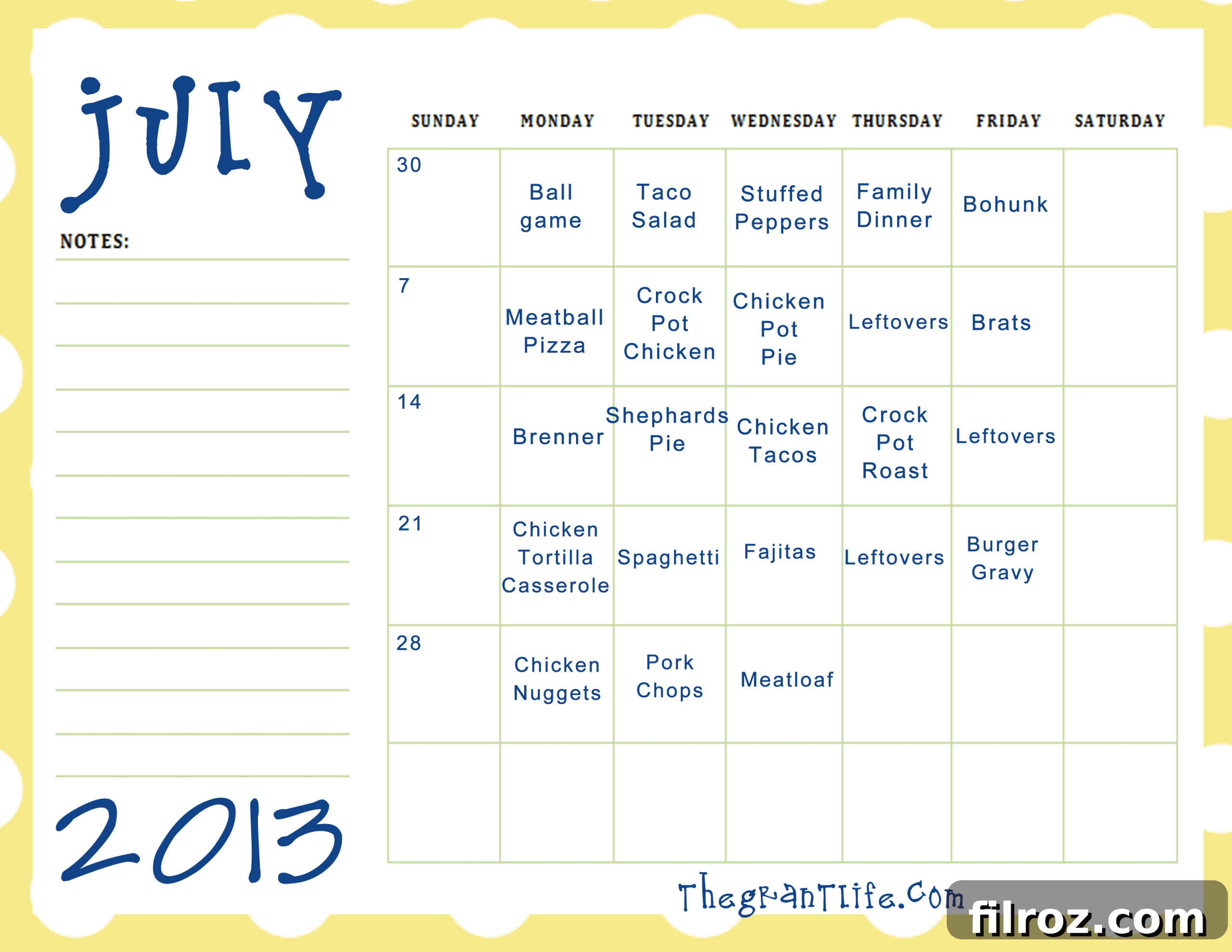
Meal planning is not about rigid adherence; it’s about creating a framework that supports your family’s lifestyle. One key aspect I’ve learned is the importance of flexibility and involving everyone in the process. As you can see from my personal plan, I often don’t cook on the weekends. My philosophy is simple: if I’m handling the cooking for five out of seven days, the weekends are a perfect opportunity for someone else to step up – or for us to enjoy a simpler meal.
Involving Loved Ones in the Process
Meal planning can be a collaborative effort. Encourage family members to suggest their favorite meals or even pick a night to be in charge of dinner. This not only lightens your load but also makes everyone feel more invested in the plan. Even young children can help with simple tasks, like setting the table or washing vegetables, fostering a positive relationship with food and cooking.
Delegating Kitchen Duties
My household, for example, has its own division of labor. While I enjoy planning and preparing most weeknight meals, weekends often see different chefs take the helm. My son, Ryley, for instance, has truly mastered the art of cereal-making, a vital skill for weekend breakfasts! Whether it’s ordering takeout, preparing a simple meal like sandwiches, or even someone else cooking, delegating tasks can give you a much-needed break and promote culinary independence within the family.
Building in Flexibility
Life happens, and sometimes a planned meal just won’t work out. It’s crucial to build in buffer days, “eat out” nights, or designated “leftover” meals into your plan. Don’t view deviations as failures; see them as opportunities for spontaneity or necessary adjustments. A flexible meal plan is a sustainable meal plan. If you have extra ingredients from one meal, incorporate them into another. If a recipe fails, have a backup plan or a go-to simple meal you can whip up quickly.
Tools and Resources for Seamless Planning
To make your meal planning journey even smoother, a variety of tools and resources are available. From traditional methods to modern technology, finding what works best for you can significantly enhance your experience:
Printable Templates and Planners
Many people find immense satisfaction in a physical planner. There’s something wonderfully tactile about writing out your meals and crossing them off. If you appreciate a visually appealing and organized system, you’ll love a fancy printable planner. In fact, if you sign up for our newsletter [you’ll find the signup box over on the right-hand side of this page], a blank, easy-to-use template will be emailed directly to you! This makes getting started incredibly simple and provides a clear, actionable document for your kitchen.
Digital Apps and Software
For those who prefer a tech-savvy approach, numerous meal planning apps and websites offer features like recipe management, automated shopping list generation, and nutritional tracking. These digital tools can sync across devices, making your plan accessible wherever you are. Explore options like Paprika, Mealime, or Plan to Eat to see if they align with your planning style.
Cookbooks, Blogs, and Online Communities
Never underestimate the power of inspiration from others. Keep a collection of your favorite cookbooks handy, follow food blogs for fresh ideas, and engage with online communities focused on meal planning. Sharing tips, triumphs, and challenges with like-minded individuals can provide invaluable support and endless new recipes to try.
A Glimpse into My July Meal Plan
This visual guide gives you a snapshot of what our family will be enjoying this month. It’s a carefully curated selection designed for flavor, nutrition, and ease of preparation.
Some of the standout meals you’ll find on the plan include:
Stuffed Peppers
Bohunk Barbecue
Chicken Pot Pie
Homemade Chicken Nuggets
Each recipe has been chosen to provide a balanced meal, cater to family favorites, and incorporate seasonal ingredients where possible. From the satisfying warmth of a Chicken Pot Pie on a cooler evening to the vibrant flavors of Stuffed Peppers, there’s something to look forward to every day. And yes, some nights we embrace the simplicity of dishes like Homemade Chicken Nuggets – a healthier, homemade alternative to a classic kid-pleaser. We also love to incorporate local favorites, like a delicious treat from Bohunk Barbecue, into our dining schedule, making sure there’s a good mix of home-cooked meals and special experiences.
As I mentioned earlier, our weekends are generally reserved for simpler fare or for others to take the cooking reins. This approach ensures that meal preparation doesn’t become a source of burnout, allowing us to fully enjoy our family time without the pressure of elaborate cooking every single day. Happy Monday, everyone – and a very happy July first to you all!
Join the Meal Planning Movement!
So, are you ready to transform your kitchen and simplify your life? Monthly meal planning might just be the secret ingredient you’ve been searching for. It’s an investment in your time, your health, and your peace of mind.
I’d love to hear from you! Do you currently menu plan, whether it’s weekly, bi-weekly, or monthly? What are your biggest meal planning challenges, and what strategies have you found most effective? Share your thoughts and tips in the comments below – let’s build a community of empowered home cooks!