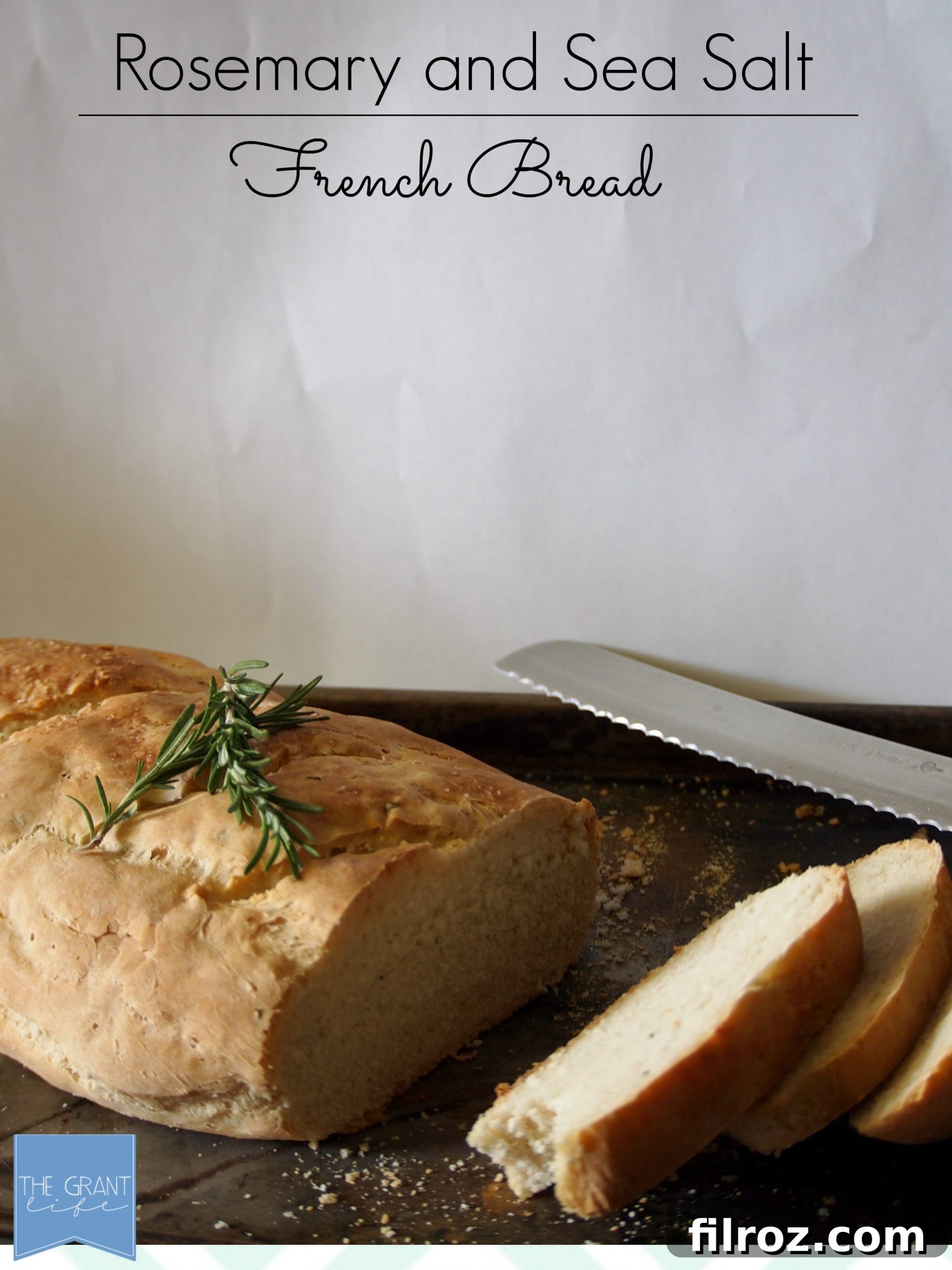
Experience the Aroma of Homemade Rosemary and Sea Salt French Bread
There’s an undeniable magic that happens in the kitchen when you bake bread from scratch. The journey began for me with a simple homemade French bread recipe, a revelation that transformed my perception of baking. The sheer satisfaction of kneading dough, watching it rise, and pulling a golden-crusted loaf from the oven is unmatched. It’s more than just food; it’s an experience, a connection to age-old traditions, and a joy that permeates the entire home. That initial success left me craving more, dreaming of new flavors and variations.
The idea struck like a bolt of inspiration: why not elevate that classic French bread with the earthy fragrance of fresh rosemary and the subtle crunch of sea salt? The thought alone was enough to send me back into the kitchen, eager to experiment. What unfolded was a culinary triumph, a loaf so fragrant and flavorful that it felt like everything was right in the world. This isn’t just a recipe; it’s an invitation to savor the simple pleasures of baking and to create something truly extraordinary with your own hands.
The Art of Hand-Kneading: A Truly Homemade Loaf
While my initial French bread adventure utilized the convenience of a stand mixer, for this particular creation, I opted for a truly hands-on approach. That’s right – no mixer involved! Every step, from the initial mixing to the vigorous kneading, the gentle punching down, and the final shaping, was done entirely by hand. There’s something deeply therapeutic and immensely rewarding about feeling the dough transform under your fingertips, understanding its elasticity and texture in a way a machine simply cannot convey. Perhaps it was this extra touch of manual effort that imbued the bread with its exceptionally delightful taste and rustic charm.
Embracing the traditional method of hand-kneading connects you more intimately with the bread-making process. It allows you to develop the gluten precisely, adjusting to the dough’s needs in real-time, whether it requires a touch more flour or a bit more water. This tactile connection often results in a loaf with a more nuanced flavor and a wonderfully chewy texture. Don’t be intimidated; hand-kneading is a skill easily learned, and the rewards are well worth the effort. It’s an activity that truly grounds you, allowing you to create something beautiful and delicious with patience and love.
Essential Ingredients for Your Rosemary & Sea Salt French Bread
Gathering the right ingredients is the first step to a successful bake. Quality truly makes a difference, especially when you’re working with such simple, foundational components. Here’s what you’ll need to create two magnificent loaves of this aromatic bread:
- 2 packages (about 4.5 teaspoons) active dry yeast: I personally recommend Fleischmann’s for consistent results. Ensure your yeast is fresh and active for the best rise.
- 2 1/2 cups warm water: The ideal temperature is between 105-115°F (40-46°C). This is crucial for activating the yeast without killing it.
- 1 tablespoon regular salt: This is essential for flavor and also plays a role in regulating yeast activity and gluten development.
- 1 tablespoon butter: Melted butter adds richness and tenderness to the bread.
- 7 cups all-purpose flour: While some prefer bread flour, all-purpose works beautifully for a tender yet sturdy French bread.
- 2 sprigs of fresh Rosemary: Fresh rosemary is key here; its vibrant, piney aroma and flavor are unparalleled. Dried rosemary simply won’t achieve the same fragrant results.
- 1 tablespoon coarse sea salt: Used for sprinkling on top, providing that delightful burst of salty flavor and a beautiful visual appeal.
The Perfect Yield: Two Loaves of Bliss
This recipe generously yields two full-sized loaves of bread, which can be both a blessing and a delightful dilemma. It’s fantastic if you’re feeding a large family, hosting a dinner party, or simply wish to share the joy of homemade bread with a friend or neighbor. There’s nothing quite like gifting a warm, fragrant loaf straight from your oven. However, if you find yourself with two loaves and no immediate plans to share, then you get the wonderful “problem” of having to enjoy it all yourself! And let’s be honest, that’s hardly the worst predicament to be in.
I was fortunate enough to put my two loaves to good use: one was shared with our church community, spreading a little bit of homemade warmth, and the second was reserved for our traditional Sunday dinner with my family. These Sunday dinners at my parents’ house are a cherished tradition, always a grand Italian feast where my mom takes charge of the cooking, and I handle the cleanup. It’s a perfect division of labor and a wonderful way to connect over incredible food. A fresh loaf of this rosemary and sea salt French bread is the ideal accompaniment to such a meal, soaking up savory sauces and providing a satisfying crunch.
A Taste of Nostalgia: Reminiscent of Restaurant Favorites
The moment I pulled these loaves from the oven, the aroma alone transported me. The distinctive smell and robust flavor were strikingly similar to the complimentary appetizer bread served at Macaroni Grill. If you’ve ever experienced that warm, crusty bread, you know exactly the kind of delightful memory it evokes. (And yes, I absolutely smell my bread – who doesn’t revel in that incredible scent?) This homemade version captures that same inviting essence, making every bite a comforting culinary journey.
While a simple dip in quality olive oil with a pinch of red pepper flakes and herbs would have been exquisite with this bread, we happily devoured ours alongside a hearty lasagna and a crisp green salad. And speaking of lasagna, keep an eye out because I’ll be sharing my momma’s legendary lasagna recipe very soon – it truly is out of this world! But for now, let this easy rosemary and sea salt French bread recipe be your next kitchen adventure. It’s perfect on its own, with a meal, or as a sophisticated appetizer. Get ready to impress yourself and everyone at your table!
Rosemary and Sea Salt French Bread
Ingredients
- 2 packages active dry yeast (such as Fleischmann’s)
- 2 1/2 cups warm water (105-115°F)
- 1 tablespoon regular salt
- 1 tablespoon melted butter
- 7 cups all-purpose flour
- 2 sprigs fresh Rosemary, leaves finely chopped
- 1 tablespoon coarse sea salt, for sprinkling
Instructions
- Begin by running your main mixing bowl under warm water to slightly pre-warm it. This helps activate the yeast more effectively.
- Add the 2.5 cups of warm water to the pre-warmed bowl, then sprinkle in the active dry yeast. Allow it to sit for 5-10 minutes until foamy, indicating the yeast is active.
- While the yeast is activating, in a separate large bowl, combine the regular salt, melted butter, and 7 cups of flour. Use a whisk or fork to mix them thoroughly.
- Carefully remove the leaves from the fresh rosemary sprigs and finely chop them. Add these fragrant chopped rosemary leaves to the flour mixture, distributing them evenly.
- Once the yeast mixture is foamy, pour it into the bowl with the flour and rosemary mixture.
- Using your hands, gently bring the ingredients together, then begin to knead the dough. Knead for approximately 3-5 minutes, or until the dough comes together and is relatively smooth. It will be slightly sticky at first, but don’t add too much extra flour.
- Lightly grease a clean bowl with oil or cooking spray. Place the dough in the greased bowl, then turn it over once to ensure all sides are coated.
- Cover the bowl with a clean kitchen towel and let it rise in a warm, draft-free place for about 1 hour, or until it has doubled in size. This first rise develops much of the bread’s flavor.
- Once the dough has risen, gently remove it from the bowl and place it on a lightly floured surface. Punch it down gently to release the air.
- Divide the dough into two equal halves. Take each half and gently roll it out into a rectangular shape.
- Carefully shape each rectangle into a long, slender French bread loaf. Place the shaped loaves onto a greased baking sheet or one dusted with cornmeal or lined with parchment paper. Ensure there’s space between the loaves.
- Cover the loaves again with a towel and let them rise for a second time, for another hour, or until they have noticeably increased in size and appear puffy.
- Just before baking, lightly brush or mist the tops of the loaves with a small amount of water. This helps create a crispier crust.
- Generously sprinkle the coarse sea salt over the top of each loaf. Using a sharp knife or a bread lame, make a few diagonal slits across the top of each loaf (about 1/2 inch deep).
- Preheat your oven to 450°F (232°C). Bake each loaf for approximately 25 minutes, or until deeply golden brown and sounds hollow when tapped on the bottom.
- Remove the loaves from the oven and transfer them to a wire rack to cool completely before slicing. This allows the internal structure to set.
Tips for Baking the Perfect Loaf Every Time
Achieving bakery-quality French bread at home is simpler than you might think with a few key techniques. First, always ensure your yeast is active. If your warm water and yeast mixture doesn’t foam after 5-10 minutes, your yeast might be old or the water temperature was off, and it’s best to start again. Secondly, don’t rush the rising process. Temperature and humidity play a big role, so if your kitchen is cool, your dough might need a bit longer to double in size. A slightly warm oven (turned off, of course) or a warm spot near a sunny window can help.
When kneading by hand, pay attention to the dough’s texture. It should feel smooth and elastic, not sticky or stiff. If it’s too sticky, add a tiny bit more flour, a tablespoon at a time. If it’s too stiff, a little water can help, but generally, French bread dough is quite forgiving. The final proof (second rise) is important for the bread’s airy texture; be gentle when handling the dough after this rise to avoid deflating it. Finally, the cuts on top of the loaf aren’t just for aesthetics; they allow the bread to expand properly in the oven, preventing it from bursting irregularly.
Serving Suggestions to Complement Your Loaf
This Rosemary and Sea Salt French Bread is incredibly versatile. Beyond being a delightful accompaniment to hearty Italian meals like my mom’s lasagna, it shines in many other contexts. Consider serving it alongside a robust beef stew or a creamy tomato soup for a truly comforting meal. For an elegant appetizer, slice it, toast it lightly, and serve with a platter of gourmet cheeses, cured meats, and a bowl of high-quality olive oil for dipping. You could also transform it into fantastic sandwiches, offering a more flavorful base than traditional sandwich bread.
Another wonderful way to enjoy it is simply with butter, allowing the subtle notes of rosemary and the crisp burst of sea salt to take center stage. For breakfast or brunch, it makes excellent toast points for poached eggs or avocado toast. The possibilities are truly endless, limited only by your imagination. No matter how you choose to enjoy it, this bread is sure to be a crowd-pleaser and a regular request from your family and friends.
Be sure to check out these other easy homemade recipes for more inspiration:
- Homemade French Bread // A foundational, basic bread recipe that is oh so tasty and serves as the perfect starting point.
- Beer Bread // A surprisingly simple and incredibly flavorful bread that my hubby often makes, and I’m always happy to eat!
Want more delicious, easy-to-make recipes delivered straight to your inbox? Sign up for our emails and never miss a new post!